
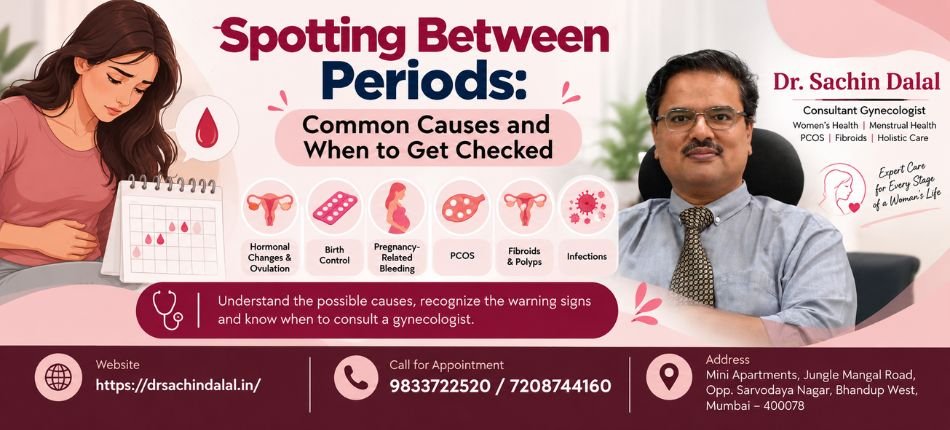
Spotting Between Periods: Common Causes and When to Get Checked – Dr. Sachin Dalal
Spotting or light bleeding between regular menstrual periods can be unexpected and sometimes worrying. While an isolated episode may have a relatively simple explanation, repeated spotting between periods can also be associated with hormonal changes, contraception, pregnancy-related causes, infections, fibroids, polyps, or other gynecological conditions. Bleeding or spotting between periods is considered a form of abnormal uterine bleeding, so persistent or unexplained episodes deserve medical attention.
If you are experiencing changes in your menstrual cycle, professional evaluation can help determine the underlying cause. You can learn more about Gynecology Treatment by Dr. Sachin Dalal for menstrual concerns, hormonal conditions, PCOS, fibroids, polyps and other women’s health issues.
In this guide, we explain what spotting means, common causes of bleeding between periods, symptoms to watch for, how the condition may be evaluated, and when you should consult a gynecologist.
What Is Spotting Between Periods?
Spotting refers to light vaginal bleeding that occurs outside your expected menstrual period. It may appear as a small amount of pink, red or brown discharge and is usually lighter than a normal menstrual flow.
Spotting is different from a regular period because it occurs at an unexpected point in the menstrual cycle and is generally lighter. However, the amount and pattern can vary from person to person.
ACOG includes bleeding or spotting between periods and spotting after sex among patterns of abnormal uterine bleeding. ACOG
Is Spotting Between Periods Always a Cause for Concern?
Not necessarily. There are several possible explanations for spotting, and the cause cannot be determined from the bleeding pattern alone.
For example, hormonal contraception can cause breakthrough bleeding, particularly after starting or changing a contraceptive method. Other possible causes include problems with ovulation, fibroids, polyps, infections and pregnancy-related conditions.
What matters is when the spotting occurs, how often it happens, how much you bleed and whether you have other symptoms.
1. Hormonal Changes and Ovulation
Changes in reproductive hormones can affect the normal menstrual cycle and may lead to irregular or unexpected bleeding.
Problems with ovulation are one recognized cause of abnormal uterine bleeding. Conditions that affect ovulation, including PCOS and thyroid disorders, may also contribute to menstrual irregularity.
If spotting repeatedly occurs along with irregular periods, missed periods or other menstrual changes, a gynecological assessment may help identify whether an underlying hormonal or ovulatory issue is involved.
2. Hormonal Birth Control
Hormonal contraception is a common cause of bleeding between periods. This can occur with contraceptive pills and other hormonal methods, particularly when a method has recently been started or changed.
Missing contraceptive pills or using them inconsistently can also affect bleeding patterns.
Do not stop prescribed contraception solely because of spotting without discussing the situation with your healthcare professional, particularly if you rely on it to prevent pregnancy.
3. Pregnancy-Related Bleeding
Unexpected bleeding can sometimes occur during pregnancy, and pregnancy-related causes need to be considered when there is a possibility of conception.
If you have missed a period and develop unusual vaginal bleeding together with abdominal or pelvic pain, prompt medical assessment is important because this combination can occur with an ectopic pregnancy.
A pregnancy test may therefore be part of the evaluation of unexpected bleeding when pregnancy is possible.
4. PCOS and Irregular Ovulation
Polycystic ovary syndrome (PCOS) can affect ovulation and menstrual regularity. When ovulation does not occur regularly, the timing and pattern of bleeding can change.
Other features may include irregular or missed periods, although symptoms vary considerably between individuals.
Spotting alone cannot diagnose PCOS. A gynecologist considers menstrual history, other symptoms and appropriate investigations before determining the cause.
5. Uterine Fibroids and Polyps
Fibroids are noncancerous growths arising from uterine muscle, while polyps are growths that may develop within the uterus or on the cervix. Both can be associated with abnormal or irregular bleeding.
Depending on their size and location, some people may also experience heavier menstrual bleeding or other symptoms.
Because several conditions can produce similar bleeding patterns, an examination and, where appropriate, imaging may be required rather than trying to identify the cause from symptoms alone.
6. Cervical Changes
Some episodes of unexpected bleeding originate from the cervix rather than the uterus.
For example, cervical ectropion and cervical polyps are among possible explanations for bleeding after sex. Vaginal dryness and infections can also contribute to bleeding in some cases.
Repeated bleeding after intercourse should therefore be discussed with a healthcare professional rather than automatically attributing it to menstruation.
7. Infections
Certain sexually transmitted infections, including chlamydia, can cause bleeding between periods or after sex.
Depending on the cause, additional symptoms may be present, although an infection does not always produce obvious symptoms.
If an infection is considered possible, appropriate testing may be recommended as part of the evaluation.
8. Perimenopause
As menopause approaches, hormonal patterns and ovulation can change. Periods may become shorter or longer, and bleeding may become lighter or heavier.
However, bleeding between periods should not automatically be assumed to be a normal part of ageing. ACOG advises discussing abnormal bleeding changes with an obstetrician-gynecologist.
Spotting Between Periods vs a Regular Period
It can sometimes be difficult to tell whether bleeding represents spotting, an early period or another menstrual change.
Keeping track of the date, duration and amount of bleeding can help. You can also note whether the bleeding occurs after sex or is accompanied by pelvic discomfort or other symptoms.
ACOG recommends tracking when bleeding occurs and whether it is light, medium, heavy or spotting because this information can assist with medical evaluation.
When Should You Get Spotting Between Periods Checked?
Repeated or unexplained spotting between periods should be discussed with a healthcare professional. The NHS specifically advises medical evaluation for bleeding between periods or after sex because there are many possible causes and the reason should be established.
You should particularly arrange an evaluation if the spotting:
- Keeps happening across multiple cycles
- Becomes heavier or lasts longer
- Occurs after sexual intercourse
- Is associated with significant pelvic discomfort
- Occurs when pregnancy is possible
- Represents a clear change from your usual menstrual pattern
- Occurs after menopause
Bleeding after menopause should always be medically evaluated.
When Is Urgent Medical Attention Needed?
Seek prompt medical attention if you have recently missed a period and experience unusual vaginal bleeding together with abdominal or pelvic pain, as an ectopic pregnancy needs to be ruled out.
Very heavy bleeding can also require urgent assessment. ACOG advises emergency care when bleeding soaks through a pad or tampon every hour for more than two consecutive hours and is accompanied by symptoms such as chest pain, shortness of breath, lightheadedness or dizziness
How Is Spotting Between Periods Evaluated?
Evaluation of spotting between periods usually begins with a review of your menstrual cycle, bleeding pattern, symptoms, medications, and contraceptive use. Your gynecologist may also ask whether pregnancy is possible and whether the spotting occurs after intercourse. Depending on your symptoms, tests such as a pregnancy test, blood tests, pelvic examination, ultrasound, or infection screening may be recommended. These evaluations help identify the underlying cause and determine the appropriate treatment.
Should You Track Spotting Before Your Appointment?
Yes. Keeping a menstrual diary can provide useful information to your gynecologist.
Record the first and last day of your period, any spotting between periods, approximate amount of bleeding, whether spotting happens after intercourse, and any associated symptoms.
This makes it easier to identify whether the bleeding was an isolated episode or follows a recurring pattern. ACOG
How Is Spotting Between Periods Treated?
There is no single treatment for spotting because treatment depends on the underlying cause.
For example, management of bleeding related to hormonal contraception may differ from treatment for a polyp, fibroid, infection, ovulation disorder or pregnancy-related condition.
This is why self-treating recurrent spotting with hormonal medicines or supplements without identifying the cause is not advisable. Medical evaluation can guide treatment based on the individual diagnosis.
Can Spotting Affect Fertility?
Spotting itself does not automatically mean that a person has a fertility problem.
However, some underlying conditions associated with abnormal menstrual patterns—such as irregular ovulation or PCOS—can also affect fertility in some people.
If you are trying to conceive and experience repeated spotting, irregular cycles or other menstrual changes, discussing them with your gynecologist can help determine whether further evaluation is appropriate.
Common Mistakes to Avoid
One common mistake is assuming that every episode of spotting is caused by hormonal imbalance. Another is ignoring repeated spotting simply because the amount of blood is small.
Avoid diagnosing the cause based only on internet searches or symptoms. Also avoid starting hormonal medicines specifically to control bleeding without appropriate medical guidance.
The same symptom can have many possible explanations, so persistent changes are best evaluated individually.
Conclusion
Spotting between periods can occur for many reasons, including hormonal or ovulatory changes, contraception, pregnancy-related conditions, PCOS, fibroids, polyps, infections and cervical conditions. The bleeding pattern alone cannot reliably identify the cause.
If spotting keeps recurring, occurs after sex, becomes heavier, appears after menopause or is accompanied by concerning symptoms, a gynecological evaluation can help determine the cause and appropriate next steps.
For menstrual concerns and other women’s health issues, Dr. Sachin Dalal provides gynecological care in Bhandup West, Mumbai. His gynecology services include evaluation and management of menstrual concerns, PCOS, hormonal imbalance, fibroids, polyps and other gynecological conditions.
Dr. Sachin Dalal
Website – Dr. Sachin Dalal
Appointment: 9833722520 / 7208744160
Address: Mini Apartments, Jungle Mangal Road, Opp. Sarvodaya Nagar, Bhandup West, Mumbai – 400078.
Spotting Between Periods Spotting Between Periods Spotting Between Periods Spotting Between Periods Spotting Between Periods Spotting Between Periods Spotting Between Periods Spotting Between Periods Spotting Between Periods Spotting Between Periods Spotting Between Periods Spotting Between Periods Spotting Between Periods