
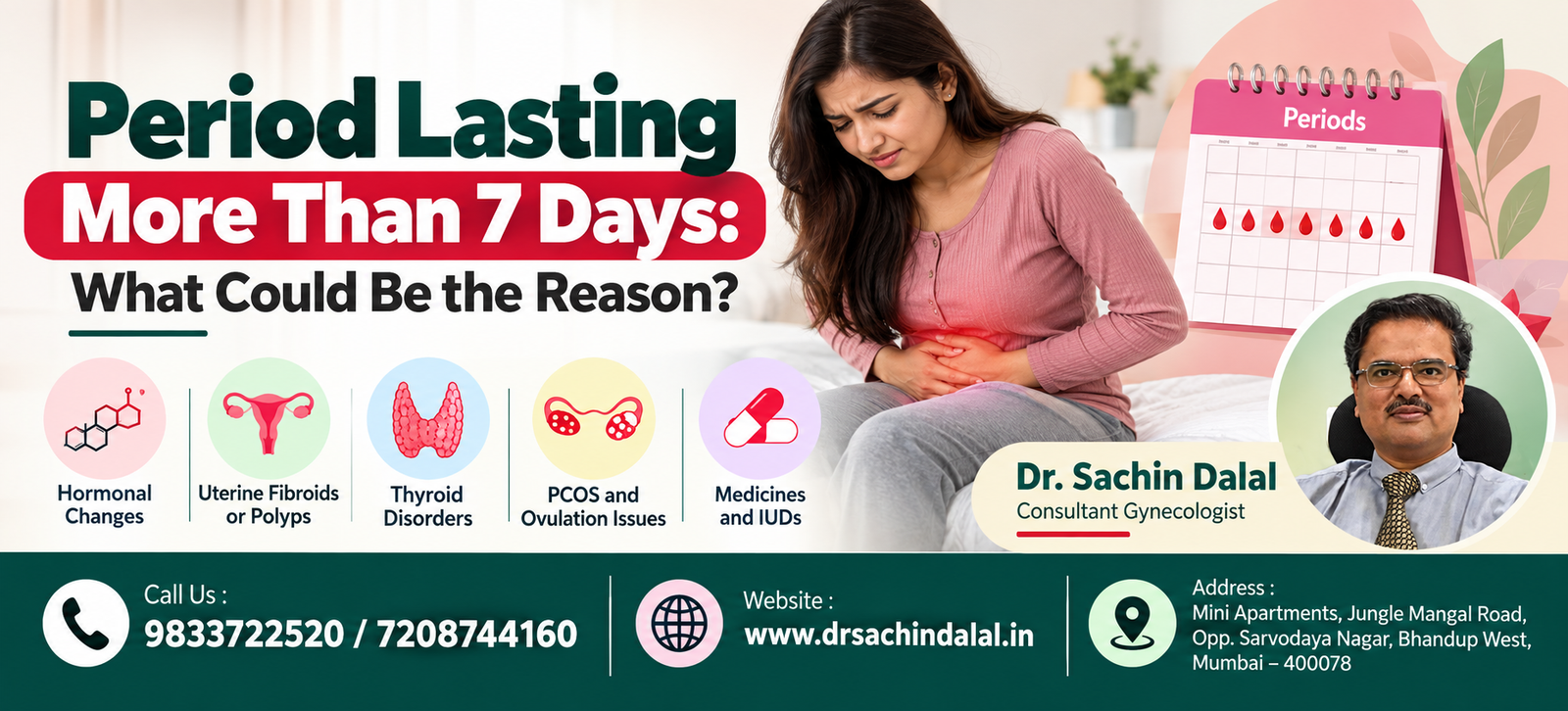
Period Lasting More Than 7 Days : What Could Be the Reason? – Dr. Sachin Dalal
Introduction
A menstrual period commonly lasts for several days, but the duration and flow can vary from one person to another. When a period lasts more than 7 days, particularly when this is different from your usual menstrual pattern or is accompanied by heavy bleeding, clots, tiredness, or discomfort, it may be worth discussing with a gynecologist.
A prolonged period can occur for several reasons, including hormonal changes, uterine fibroids, polyps, thyroid disorders, PCOS, or other gynecological conditions. Women experiencing persistent changes in their menstrual cycle can learn more about Gynecology Treatment in Mumbai provided by Dr. Sachin Dalal for menstrual and other women’s health concerns. Dr. Sachin Dalal
The underlying cause cannot be determined from the duration of bleeding alone, so proper evaluation is important when the problem is persistent or recurrent. In this article, we explain the possible reasons for a Period Lasting More Than 7 Days, associated symptoms, diagnosis, treatment options, and when you should consult a gynecologist.
How Long Does a Normal Period Usually Last?
Menstrual cycles differ between individuals, and even the same person’s cycle may vary occasionally. Menstrual bleeding generally lasts up to about seven days, although the duration and amount of bleeding can differ.
An occasional change does not necessarily indicate a medical problem. However, bleeding that repeatedly continues beyond seven days, becomes substantially heavier than usual, or interferes with everyday activities deserves medical evaluation.
What Does a Period Lasting More Than 7 Days Mean?
Bleeding that continues for longer than seven days can be considered prolonged menstrual bleeding. Doctors assess more than the number of days alone—they may also consider how heavy the bleeding is, whether clots are present, how frequently sanitary products need changing, and whether the pattern has recently changed.
Prolonged or unusually heavy menstrual bleeding can sometimes contribute to iron deficiency and anemia, particularly when it occurs repeatedly.
Common Reasons for a Period Lasting More Than 7 Days
Several factors can affect the duration and amount of menstrual bleeding. Some are related to hormonal fluctuations, while others involve structural changes in the uterus or underlying health conditions.
Determining the cause generally requires considering the person’s age, menstrual history, associated symptoms, medicines, pregnancy possibility, and relevant medical conditions.
1. Hormonal Imbalance
Hormones such as estrogen and progesterone help regulate the menstrual cycle and the development and shedding of the uterine lining. When ovulation or hormone patterns are disrupted, the lining may build up differently and bleeding can become irregular or prolonged.
Hormonal changes may occur during adolescence, around perimenopause, or in association with several health conditions. Evaluation can help determine whether hormonal factors are contributing to the menstrual changes.
2. Uterine Fibroids
Fibroids are non-cancerous growths that develop in or around the uterus. Depending on their size and location, some fibroids can be associated with longer or heavier periods, pelvic pressure, discomfort, or a feeling of fullness in the lower abdomen.
Not every fibroid causes symptoms or requires treatment. Ultrasound and clinical evaluation can help determine whether fibroids are contributing to prolonged menstrual bleeding.
3. Uterine Polyps
Uterine or endometrial polyps are growths arising from the inner lining of the uterus. They can sometimes be associated with prolonged periods, bleeding between periods, or irregular menstrual bleeding.
Polyps are often benign, but abnormal bleeding should still be evaluated. Depending on the patient’s symptoms and clinical findings, the gynecologist may recommend imaging or other investigations.
4. Thyroid Disorders
Thyroid hormones influence several functions in the body and can also affect menstrual patterns. Both underactive and overactive thyroid conditions may be associated with changes in the frequency, duration, or amount of menstrual bleeding.
When symptoms or medical history suggest a thyroid problem, blood tests may be recommended to assess thyroid function.
5. Polycystic Ovary Syndrome (PCOS)
PCOS can affect normal ovulation and menstrual regularity. Some people with PCOS experience infrequent or irregular periods, and when bleeding occurs it may sometimes be prolonged or heavier.
PCOS can also be associated with symptoms such as acne, increased facial or body hair, or difficulty with weight management, although symptoms vary considerably between individuals.
6. Adenomyosis
Adenomyosis occurs when tissue similar to the uterine lining grows within the muscular wall of the uterus. It may be associated with heavy or prolonged menstrual bleeding, painful periods, pelvic discomfort, or uterine enlargement.
Symptoms can overlap with other gynecological conditions, so evaluation is important rather than relying on symptoms alone.
7. Intrauterine Devices and Certain Medicines
Some types of intrauterine devices, particularly copper IUDs, can be associated with heavier or longer menstrual bleeding, especially during the initial months after insertion.
Certain medicines, including blood-thinning medications and some hormonal treatments, may also affect menstrual bleeding. Medicines should not be stopped or changed without discussing the issue with the prescribing doctor.
8. Pregnancy-Related Bleeding
Bleeding during pregnancy is not considered a menstrual period. However, someone who does not yet know they are pregnant may initially mistake pregnancy-related bleeding for an unusual or prolonged period.
If pregnancy is possible and the bleeding pattern is unusual, medical evaluation is important. Heavy bleeding, severe abdominal pain, dizziness, fainting, or other concerning symptoms during possible pregnancy require prompt assessment.
9. Bleeding Disorders
Less commonly, prolonged or heavy periods can be associated with an underlying bleeding disorder. This may be considered particularly when heavy menstrual bleeding has been present since adolescence or there is a history of easy bruising, frequent nosebleeds, prolonged bleeding after dental procedures, or similar problems.
A doctor may recommend appropriate blood tests when a bleeding disorder is suspected.
Symptoms That May Occur With Prolonged Periods
A period lasting more than 7 days may occur alone or together with other menstrual symptoms. These can include unusually heavy flow, passing larger clots, pelvic discomfort, bleeding between periods, tiredness, weakness, or shortness of breath.
Persistent blood loss can sometimes lead to iron deficiency or anemia. Therefore, prolonged bleeding accompanied by increasing fatigue, dizziness, paleness, or breathlessness should be discussed with a healthcare professional.
Can Prolonged Periods Cause Anemia?
Yes, repeated heavy or prolonged menstrual bleeding can result in significant iron loss over time. This can contribute to iron-deficiency anemia.
Symptoms may include fatigue, weakness, dizziness, headaches, paleness, reduced exercise tolerance, or shortness of breath. Blood tests such as a complete blood count may be used to check for anemia, and additional tests may be recommended when necessary.
How Is a Period Lasting More Than 7 Days Evaluated?
Evaluation usually begins with a detailed menstrual and medical history. A gynecologist may ask about the duration and heaviness of bleeding, menstrual regularity, pregnancy possibility, associated pain, medications, previous pregnancies, and other symptoms.
Depending on the individual situation, evaluation may include a physical or pelvic examination, blood tests, pregnancy testing, thyroid testing, or pelvic ultrasound. Additional investigations may be recommended according to age, symptoms, medical history, and initial findings.
When Should You Consult a Gynecologist?
A gynecological consultation should be considered if periods repeatedly last longer than seven days, the bleeding has suddenly become substantially heavier, bleeding occurs between periods, or menstrual changes are affecting normal activities.
Evaluation is also advisable when prolonged periods are associated with significant pelvic discomfort, unusual discharge, fatigue, dizziness, or other new symptoms. Early assessment can help identify the underlying cause and determine whether treatment is necessary.
When Does Heavy Bleeding Need Urgent Medical Attention?
Seek urgent medical care if menstrual or vaginal bleeding is extremely heavy—for example, if you are soaking through a pad or tampon every hour for more than two consecutive hours—particularly if this occurs with dizziness, fainting, shortness of breath, chest discomfort, or marked weakness.
Severe abdominal or pelvic pain with heavy bleeding also requires prompt assessment. If pregnancy is possible, unusual heavy bleeding or significant pain should be evaluated urgently.
Treatment for Prolonged Menstrual Bleeding
Treatment depends on the underlying cause, severity of bleeding, age, medical history, and whether pregnancy is desired in the future. There is no single treatment suitable for every person experiencing prolonged periods.
Depending on the diagnosis, a doctor may consider medicines to reduce menstrual bleeding, hormonal treatment, treatment for anemia, management of an underlying thyroid or hormonal condition, or procedures for certain fibroids or polyps.
The appropriate treatment should therefore be selected after proper evaluation rather than treating prolonged bleeding based only on symptoms.
Can Lifestyle Changes Help?
Healthy lifestyle habits can support general menstrual and overall health but should not replace medical evaluation when periods are persistently prolonged or unusually heavy.
Maintaining a balanced diet, getting adequate rest, staying physically active as appropriate, and consuming sufficient iron-containing foods may be beneficial. If anemia or iron deficiency is suspected, testing and medical guidance are preferable to starting high-dose supplements without evaluation.
Should You Track Your Menstrual Cycle?
Keeping a menstrual record can provide useful information during a gynecological consultation. You can record when each period starts and ends, days of heavier bleeding, approximate frequency of sanitary-product changes, presence of clots, pain, and bleeding between periods.
A menstrual tracking app or simple calendar can make it easier to identify changes from your usual pattern and provide your doctor with more accurate information.
Period Lasting More Than 7 Days – Consultation with Dr. Sachin Dalal
If your period is lasting more than 7 days, repeatedly becoming heavier, or accompanied by unusual symptoms, a gynecological evaluation can help identify possible causes.
Dr. Sachin Dalal provides gynecological evaluation and treatment based on the patient’s symptoms, medical history, examination, and investigations when required.
📍 Mini Apartments, Jungle Mangal Road, Opp. Sarvodaya Nagar, Bhandup West, Mumbai – 400078
📞 9833722520 / 720874419
🌐 www.drsachindalal.in
Conclusion
A Period Lasting More Than 7 Days can occur for different reasons, ranging from hormonal changes to conditions such as fibroids, polyps, thyroid disorders, PCOS, or adenomyosis. The duration of bleeding alone cannot determine the underlying cause.
Tracking your menstrual pattern and seeking medical evaluation when prolonged bleeding is persistent, unusually heavy, or accompanied by concerning symptoms can help identify the cause and guide appropriate treatment.
Period Lasting More Than 7 Days Period Lasting More Than 7 Days Period Lasting More Than 7 Days Period Lasting More Than 7 Days Period Lasting More Than 7 Days Period Lasting More Than 7 Days Period Lasting More Than 7 Days Period Lasting More Than 7 Days Period Lasting More Than 7 Days Period Lasting More Than 7 Days