
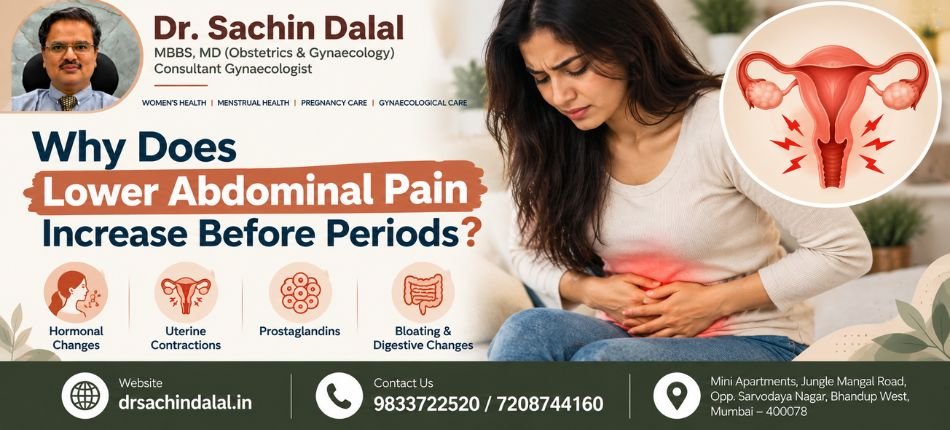
Why Does Lower Abdominal Pain Increase Before Periods? – Dr. Sachin Dalal
Many women notice lower abdominal pain before periods, sometimes beginning a few days before menstrual bleeding starts. The discomfort may feel like cramping, heaviness, pressure, or a dull ache in the lower abdomen. While mild menstrual discomfort is common, persistent or worsening symptoms may sometimes require professional evaluation. Women experiencing changes in their menstrual cycle or recurring discomfort can consider appropriate gynecology treatment for proper evaluation and guidance.
Is Lower Abdominal Pain Before Periods Normal?
Mild lower abdominal discomfort shortly before or during menstruation is common. Menstrual cramps are medically known as dysmenorrhea.
During the menstrual cycle, the lining of the uterus develops in preparation for a possible pregnancy. If pregnancy does not occur, hormonal changes cause this lining to break down and be shed during menstruation.
The uterus contracts to help expel the lining. These contractions can produce the cramping sensation experienced before or during a period.
The severity and duration of menstrual discomfort can vary considerably from one person to another.
Why Does Lower Abdominal Pain Increase Before Periods?
Several physiological changes occur in the days leading up to menstruation. These changes may explain why some women notice increasing discomfort just before their period.
1. Uterine Contractions
The uterus is a muscular organ. Around menstruation, it contracts to help shed its lining.
These contractions can create a cramping or squeezing sensation in the lower abdomen. Some women begin experiencing these cramps shortly before menstrual bleeding starts.
2. Increased Prostaglandin Activity
Prostaglandins are naturally occurring substances involved in uterine contractions. Their levels increase around the beginning of menstruation.
Higher prostaglandin activity can cause stronger uterine contractions, which may make menstrual cramps more noticeable. Prostaglandins can also influence the digestive system, which is one reason some women experience bowel changes around their periods.
3. Hormonal Changes
Estrogen and progesterone levels fluctuate throughout the menstrual cycle. Their changes before menstruation can contribute to several premenstrual symptoms.
Along with abdominal discomfort, some women may experience bloating, breast tenderness, mood changes, fatigue, headaches, or food cravings.
4. Bloating and Water Retention
Hormonal changes before menstruation can contribute to bloating and a feeling of fullness or heaviness.
Although bloating is different from uterine cramping, both can occur simultaneously. This can make lower abdominal discomfort before periods feel more noticeable.
5. Digestive Changes
Some women experience constipation, loose stools, increased bowel movements, or abdominal gas around menstruation.
Because the reproductive and digestive organs are located close together, digestive symptoms occurring at the same time as menstrual cramps can make overall abdominal discomfort feel stronger.
What Does Normal Period Cramping Usually Feel Like?
Normal period cramps usually feel like a dull ache, pressure, or cramping sensation in the lower abdomen. They may begin shortly before or around the start of menstruation and can sometimes extend to the lower back. The discomfort is often strongest during the first few days of the period and gradually improves. The intensity and duration can vary from person to person.
When Can Lower Abdominal Pain Before Periods Be a Concern?
Period-related discomfort should not automatically be dismissed simply because it happens every month.
Medical evaluation may be appropriate when the pain is new, progressively worsening, unusually severe, or interfering significantly with normal activities.
It is also important to seek medical advice if menstrual discomfort is accompanied by symptoms such as unusually heavy menstrual bleeding, bleeding between periods, pain occurring at other times of the month, or other new gynecological symptoms.
A gynecologist can assess whether the symptoms represent primary menstrual cramps or whether another condition should be investigated.
Conditions That May Cause More Severe Period-Related Pain
Several gynecological conditions can cause or contribute to significant menstrual discomfort. Having painful periods does not necessarily mean that you have one of these conditions, but persistent symptoms may warrant evaluation.
Endometriosis
Endometriosis occurs when tissue similar to the lining of the uterus grows outside the uterus. It can be associated with significant menstrual discomfort and other symptoms.
Adenomyosis
Adenomyosis occurs when tissue similar to the uterine lining grows within the muscular wall of the uterus. Some women with adenomyosis experience painful periods or heavier menstrual bleeding.
Uterine Fibroids
Fibroids are non-cancerous growths that develop in or around the uterus. Depending on their size and location, they may be associated with heavier bleeding, pelvic pressure, or menstrual discomfort.
Ovarian Cysts
Many ovarian cysts cause no symptoms and resolve without treatment. However, some cysts can cause pelvic or lower abdominal discomfort.
Because these conditions can produce overlapping symptoms, determining the cause based on symptoms alone can be difficult.
Can PMS Cause Lower Abdominal Discomfort?
Yes. Premenstrual syndrome (PMS) includes a range of physical and emotional symptoms that can occur before menstruation.
Physical symptoms may include bloating, breast tenderness, headaches, fatigue, changes in appetite, and abdominal discomfort. Emotional symptoms can include irritability, mood changes, or difficulty concentrating.
PMS symptoms typically have a recurring relationship with the menstrual cycle.
Why Do Some Women Experience More Period Pain Than Others?
Menstrual experiences vary considerably. Differences in prostaglandin activity, individual sensitivity, age, menstrual patterns, underlying health conditions, and other biological factors may influence how cramps are experienced.
This is why comparing your period discomfort directly with another person’s may not be particularly useful.
A more meaningful question is whether your own menstrual pattern has changed. A noticeable increase in pain compared with previous cycles can be worth discussing with a gynecologist.
How Is Lower Abdominal Pain Before Periods Evaluated?
A gynecologist may evaluate the timing, location, severity, and duration of lower abdominal pain and its relationship with the menstrual cycle. They may also ask about menstrual flow, cycle regularity, and other associated symptoms. Depending on the symptoms and clinical examination, additional tests or imaging may sometimes be recommended. This helps determine whether the discomfort is related to normal menstrual cramps or another underlying condition.
What Can You Track Before Visiting a Gynecologist?
Keeping a simple menstrual symptom diary can provide useful information.
For two or three cycles, consider recording when the discomfort starts, when menstruation begins, how long the symptoms last, their approximate severity, menstrual flow, and any additional symptoms.
This can help identify whether symptoms consistently follow a menstrual pattern and provide useful information during a consultation.
Can Lifestyle Measures Help With Period Discomfort?
Some women find simple self-care measures helpful for mild menstrual discomfort.
A warm compress or heating pad on the lower abdomen may provide comfort. Gentle physical activity, adequate sleep, regular meals, and maintaining hydration may also help some individuals feel better around menstruation.
Medication should be used appropriately based on individual medical circumstances. If you frequently require medication to manage significant menstrual symptoms, discussing this with a healthcare professional may be useful.
Should Severe Period Pain Be Ignored?
No. Although menstrual cramps are common, severe or progressively worsening pain should not simply be considered something every woman has to tolerate.
Pain that repeatedly prevents you from attending work or school, interrupts sleep, limits normal activities, or has become significantly worse than your previous menstrual pattern deserves medical assessment.
The purpose of evaluation is to understand the cause and determine whether specific treatment or further investigation is needed.
When Should You Consult a Gynecologist?
Consider consulting a gynecologist if lower abdominal pain before periods becomes significantly stronger than usual, persists beyond the expected menstrual period, repeatedly disrupts everyday activities, or occurs alongside unusual menstrual changes.
Prompt medical attention may be needed for sudden or severe abdominal or pelvic pain, particularly when accompanied by concerning symptoms such as fainting, marked weakness, fever, or unusually heavy bleeding.
Final Thoughts
Lower abdominal pain before periods is commonly associated with uterine contractions, prostaglandin activity, hormonal fluctuations, bloating, and digestive changes around menstruation.
Mild and predictable menstrual cramping can be part of a normal menstrual cycle. However, pain that becomes severe, changes significantly from your usual pattern, or repeatedly interferes with daily life should not automatically be dismissed as normal period pain.
Understanding your menstrual pattern and discussing persistent changes with a gynecologist can help determine whether the symptoms are part of the usual menstrual cycle or require further evaluation.
Dr. Sachin Dalal provides gynecological consultation and evaluation for menstrual and women’s health concerns.
Lower Abdominal Pain Before Periods Lower Abdominal Pain Before Periods Lower Abdominal Pain Before Periods Lower Abdominal Pain Before Periods Lower Abdominal Pain Before Periods Lower Abdominal Pain Before Periods Lower Abdominal Pain Before Periods Lower Abdominal Pain Before Periods Lower Abdominal Pain Before Periods Lower Abdominal Pain Before Periods Lower Abdominal Pain Before Periods