
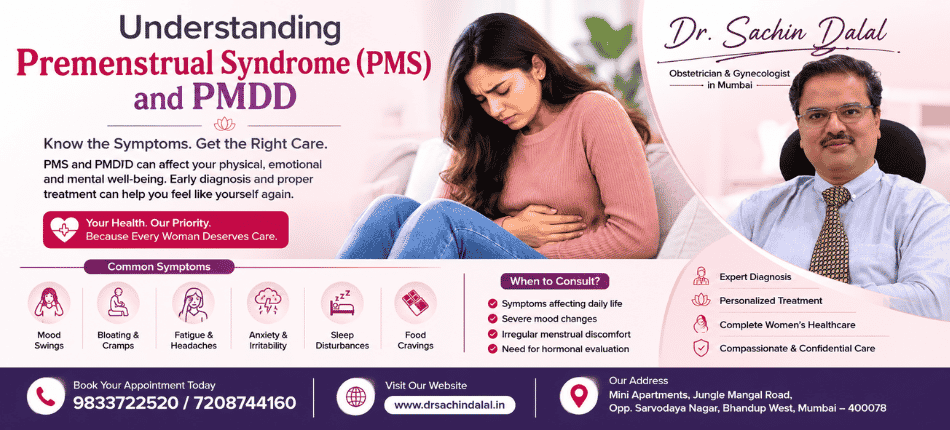
Understanding Premenstrual Syndrome (PMS) and PMDD | Obstetrician and Gynecologist in Mumbai – Dr. Sachin Dalal
Many women experience physical and emotional changes before their menstrual cycle. While mild symptoms are common and usually manageable, some women experience severe mood changes and physical discomfort that interfere with their daily lives. These conditions are known as Premenstrual Syndrome (PMS) and Premenstrual Dysphoric Disorder (PMDD). Understanding the difference between these two conditions is essential for seeking the right treatment and improving overall well-being.
If your symptoms become severe or significantly affect your work, relationships, or daily routine, consulting an experienced Obstetrician and Gynecologist in Mumbai is highly recommended.
What is Premenstrual Syndrome (PMS)?
Premenstrual Syndrome (PMS) refers to a group of physical, emotional, and behavioral symptoms that occur one to two weeks before menstruation. These symptoms are linked to hormonal fluctuations during the menstrual cycle and typically improve once the period begins. While many women experience mild PMS, the severity and combination of symptoms can vary greatly from person to person. With proper lifestyle changes and medical guidance, most women can effectively manage PMS and maintain a healthy quality of life.
What is Premenstrual Dysphoric Disorder (PMDD)?
Premenstrual Dysphoric Disorder (PMDD) is a much more severe form of PMS that primarily affects emotional and psychological health. Women with PMDD may experience intense mood swings, severe anxiety, depression, irritability, and difficulty concentrating before their menstrual cycle. These symptoms can significantly interfere with work, family life, and social relationships. PMDD is a recognized medical condition that requires proper diagnosis and treatment to prevent long-term emotional and physical complications.
Difference Between PMS and PMDD
Although PMS and PMDD share several symptoms, their severity is significantly different. PMS usually causes mild to moderate discomfort that can often be managed with lifestyle modifications, whereas PMDD results in severe emotional distress and functional impairment. Women with PMDD may find it difficult to perform routine activities due to overwhelming mood disturbances. Identifying the difference between these conditions is important because PMDD often requires specialized medical treatment beyond basic symptom management.
Common Symptoms of PMS
PMS symptoms vary from woman to woman but commonly include bloating, abdominal cramps, breast tenderness, headaches, fatigue, food cravings, mood swings, irritability, acne flare-ups, difficulty sleeping, and changes in appetite. These symptoms generally appear during the luteal phase of the menstrual cycle and subside shortly after menstruation begins. Tracking symptoms over several cycles can help identify recurring patterns and assist healthcare providers in making an accurate diagnosis.
Symptoms of PMDD
PMDD is characterized by severe emotional and psychological symptoms that go beyond typical PMS. Women may experience persistent sadness, extreme irritability, anxiety, feelings of hopelessness, panic attacks, difficulty concentrating, social withdrawal, and significant mood changes. Physical symptoms such as fatigue, joint pain, bloating, and headaches may also be present. Because these symptoms can greatly affect daily functioning, early diagnosis and treatment are essential.
What Causes PMS and PMDD?
The exact cause of PMS and PMDD remains unclear, but experts believe they result from hormonal fluctuations involving estrogen and progesterone during the menstrual cycle. These hormonal changes can affect brain chemicals such as serotonin, which regulates mood and emotional well-being. Genetics, stress, nutritional deficiencies, lack of sleep, and underlying mental health conditions may also contribute to symptom severity. Understanding these contributing factors helps healthcare providers develop personalized treatment plans.
Risk Factors
Several factors may increase the likelihood of developing PMS or PMDD. These include a family history of mood disorders, chronic stress, anxiety, depression, hormonal imbalances, inadequate physical activity, poor dietary habits, smoking, and insufficient sleep. Women in their late twenties to early forties may also notice more pronounced symptoms due to hormonal changes. Recognizing these risk factors allows for early intervention and better symptom management.
How are PMS and PMDD Diagnosed?
Diagnosis is primarily based on a detailed medical history and careful evaluation of symptoms over multiple menstrual cycles. Doctors often recommend maintaining a symptom diary to track physical and emotional changes before menstruation. A thorough physical examination may be performed to rule out other conditions such as thyroid disorders, depression, or hormonal imbalances. Accurate diagnosis is essential because the treatment approach differs depending on whether a woman has PMS or PMDD.
Treatment Options
Treatment depends on the severity of symptoms and individual health needs. Mild PMS often responds well to lifestyle modifications such as regular exercise, a balanced diet, adequate sleep, stress management, and limiting caffeine and salt intake. More severe cases may require medications, including pain relievers, hormonal contraceptives, antidepressants, or nutritional supplements. Women with PMDD often benefit from a combination of medication, psychological counselling, and lifestyle changes under the supervision of a qualified gynecologist.
Lifestyle Tips to Reduce Symptoms
Healthy daily habits can significantly reduce PMS and PMDD symptoms. Regular physical activity helps regulate hormones and improves mood, while eating a nutrient-rich diet supports overall hormonal balance. Managing stress through meditation, yoga, or relaxation techniques can reduce emotional symptoms. Staying hydrated, maintaining consistent sleep patterns, and avoiding smoking or excessive alcohol consumption further contribute to symptom control and improved menstrual health.
Why Choose Dr. Sachin Dalal?
Dr. Sachin Dalal is an experienced Obstetrician and Gynecologist in Mumbai dedicated to providing compassionate and comprehensive women’s healthcare. He offers accurate diagnosis, personalized treatment plans, advanced gynecological care, and continuous support for menstrual disorders, hormonal imbalances, pregnancy care, infertility management, and women’s wellness. His patient-centered approach ensures that every woman receives the highest standard of medical care tailored to her individual needs.
Conclusion
Premenstrual Syndrome (PMS) and Premenstrual Dysphoric Disorder (PMDD) are common conditions that can significantly affect a woman’s physical and emotional health. While PMS is generally manageable, PMDD requires prompt medical attention due to its impact on daily life. Early diagnosis, healthy lifestyle changes, and expert medical guidance can greatly improve symptoms and overall quality of life. If you experience severe menstrual-related symptoms, consult Dr. Sachin Dalal for comprehensive evaluation and personalized treatment.
Obstetrician and Gynecologist in Mumbai Obstetrician and Gynecologist in Mumbai Obstetrician and Gynecologist in Mumbai Obstetrician and Gynecologist in Mumbai Obstetrician and Gynecologist in Mumbai Obstetrician and Gynecologist in Mumbai Obstetrician and Gynecologist in Mumbai Obstetrician and Gynecologist in Mumbai Obstetrician and Gynecologist in Mumbai