
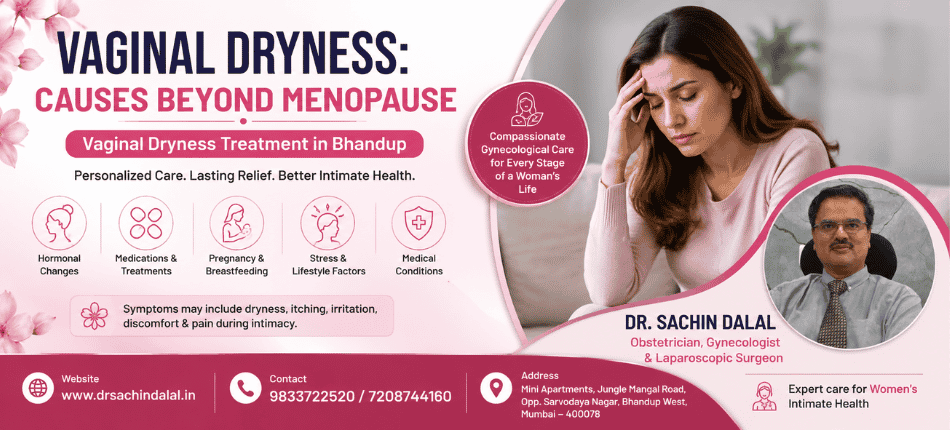
Vaginal Dryness: Causes Beyond Menopause |Vaginal Dryness Treatment in Bhandup – Dr. Sachin Dalal
Vaginal dryness is often associated with menopause, but it can affect women of all ages. Many younger women experience vaginal dryness due to hormonal fluctuations, certain medications, stress, breastfeeding, or underlying medical conditions. The condition can cause discomfort, itching, burning, irritation, and pain during intercourse, affecting both physical comfort and emotional well-being. Unfortunately, many women hesitate to discuss these symptoms, allowing the problem to persist unnecessarily.
Learn about Vaginal Dryness: Causes Beyond Menopause, its symptoms, diagnosis, and effective Vaginal Dryness Treatment in Bhandup by Dr. Sachin Dalal.
What Is Vaginal Dryness?
Vaginal dryness occurs when the tissues inside the vagina do not produce enough natural lubrication. Healthy vaginal tissues remain moist and elastic due to adequate estrogen levels and normal vaginal secretions. When lubrication decreases, the vaginal lining becomes thinner and more sensitive, leading to irritation and discomfort. Although menopause is a common cause, vaginal dryness can also occur before menopause due to various hormonal, medical, or lifestyle factors.
Common Causes of Vaginal Dryness Beyond Menopause
Although menopause is one of the most well-known causes of vaginal dryness, many other factors can contribute to this condition in women of all ages. Hormonal changes during pregnancy, breastfeeding, and the postpartum period can temporarily lower estrogen levels, reducing natural vaginal lubrication. Certain medications, including antihistamines, antidepressants, and hormonal contraceptives, may also cause dryness as a side effect. Chronic stress, anxiety, smoking, autoimmune disorders such as Sjögren’s syndrome, diabetes, and cancer treatments like chemotherapy or radiation can further affect vaginal health. In addition, using scented soaps, vaginal douches, or harsh intimate hygiene products may irritate the vaginal tissues and disrupt the natural moisture balance. Identifying the underlying cause is essential for providing effective treatment and long-term relief.
Signs and Symptoms of Vaginal Dryness
Vaginal dryness can cause a range of symptoms that may affect both physical comfort and overall quality of life. Women commonly experience persistent dryness, itching, burning, irritation, or soreness in the vaginal area. Pain or discomfort during sexual intercourse is one of the most frequent complaints and may sometimes be accompanied by light bleeding due to fragile vaginal tissues. Some women may also experience frequent urinary tract infections (UTIs), urinary urgency, discomfort during exercise, or a feeling of tightness and reduced elasticity in the vaginal area. These symptoms can vary in severity and should not be ignored, especially if they persist or interfere with daily activities. Early consultation with a gynecologist can help identify the cause and provide appropriate treatment to restore vaginal health and comfort.
Who Is at Risk?
Although vaginal dryness is more common after menopause, women of all ages can be affected. Breastfeeding mothers, women who have recently given birth, those taking hormonal contraceptives, individuals undergoing cancer treatment, women with autoimmune disorders, smokers, and those experiencing chronic stress are at a higher risk. Women who frequently use scented soaps or vaginal hygiene products may also develop irritation that contributes to dryness. Recognizing these risk factors allows for earlier diagnosis and effective management.
How Hormones Affect Vaginal Health
Estrogen plays a crucial role in maintaining healthy vaginal tissues by supporting natural lubrication, elasticity, and blood circulation. When estrogen levels decrease due to pregnancy, breastfeeding, hormonal disorders, menopause, or certain medications, the vaginal lining becomes thinner and produces less moisture. These hormonal changes can lead to dryness, irritation, discomfort, and increased susceptibility to infections. Maintaining hormonal balance is therefore essential for preserving vaginal health and overall reproductive well-being.
Complications of Untreated Vaginal Dryness
If left untreated, vaginal dryness can significantly affect a woman’s quality of life. Persistent dryness may cause painful intercourse, reduced sexual satisfaction, emotional stress, and strain in intimate relationships. The irritated vaginal tissues are also more prone to small tears, increasing the risk of infections and recurrent urinary tract infections (UTIs). In some cases, ongoing discomfort may discourage physical activity or affect daily routines. Seeking timely medical care can help prevent these complications and improve overall comfort.
How Is Vaginal Dryness Diagnosed?
Diagnosis begins with a detailed discussion of symptoms, medical history, menstrual history, medications, and lifestyle factors. A gynecologist may perform a pelvic examination to assess the condition of the vaginal tissues and identify signs of infection, inflammation, or hormonal changes. Additional tests such as vaginal swabs, urine tests, or hormone level assessments may be recommended if an underlying medical condition is suspected. Accurate diagnosis helps determine the root cause and guides the most appropriate treatment plan.
Treatment Options for Vaginal Dryness
Treatment depends on the underlying cause and severity of symptoms.
Common treatment options include:
- Vaginal moisturizers
- Water-based lubricants
- Hormonal therapy (when appropriate)
- Treatment of vaginal infections
- Lifestyle modifications
- Managing underlying medical conditions
- Medication review
- Personalized gynecological care
Your gynecologist will recommend the safest and most effective treatment based on your individual needs.
Tips to Maintain Healthy Vaginal Health
Simple lifestyle habits can help maintain vaginal health and reduce the risk of dryness. Drinking plenty of water, eating a balanced diet, managing stress, avoiding smoking, and exercising regularly contribute to overall hormonal balance and reproductive health. It is also important to avoid scented soaps, harsh intimate hygiene products, and unnecessary vaginal douching, as these can disrupt the natural vaginal environment. Using water-based lubricants during intercourse, practicing safe sex, and attending regular gynecological check-ups further support long-term vaginal health.
When Should You See a Gynecologist?
You should consult a gynecologist if vaginal dryness persists for several weeks, causes pain during intercourse, is accompanied by abnormal discharge, bleeding, itching, burning, or recurrent urinary tract infections. Women experiencing significant discomfort that affects their daily life or emotional well-being should not ignore these symptoms. Early consultation allows for accurate diagnosis, appropriate treatment, and prevention of complications while improving overall quality of life.
Why Choose Dr. Sachin Dalal for Vaginal Dryness Treatment in Bhandup?
Dr. Sachin Dalal is an experienced Obstetrician and Gynecologist dedicated to providing compassionate and personalized women’s healthcare. He offers comprehensive evaluation and treatment for vaginal dryness, hormonal disorders, menopause-related concerns, recurrent infections, and other gynecological conditions. Using a patient-centered approach, Dr. Dalal identifies the underlying cause of symptoms and develops customized treatment plans that focus on long-term relief, comfort, and improved reproductive health. With modern diagnostic techniques, expert guidance, and individualized care, he is committed to helping women regain confidence and maintain optimal intimate health.
Conclusion
Vaginal dryness is not limited to menopause and can affect women at different stages of life due to hormonal changes, medications, medical conditions, or lifestyle factors. Recognizing the symptoms early and seeking professional medical advice can help prevent complications and improve overall well-being. With proper diagnosis, personalized treatment, and healthy lifestyle habits, vaginal dryness can be effectively managed. If you experience persistent vaginal discomfort, consult an experienced gynecologist for expert evaluation and treatment.
Vaginal Dryness Treatment in Bhandup Vaginal Dryness Treatment in Bhandup Vaginal Dryness Treatment in Bhandup Vaginal Dryness Treatment in Bhandup Vaginal Dryness Treatment in Bhandup Vaginal Dryness Treatment in Bhandup Vaginal Dryness Treatment in Bhandup Vaginal Dryness Treatment in Bhandup Vaginal Dryness Treatment in Bhandup