
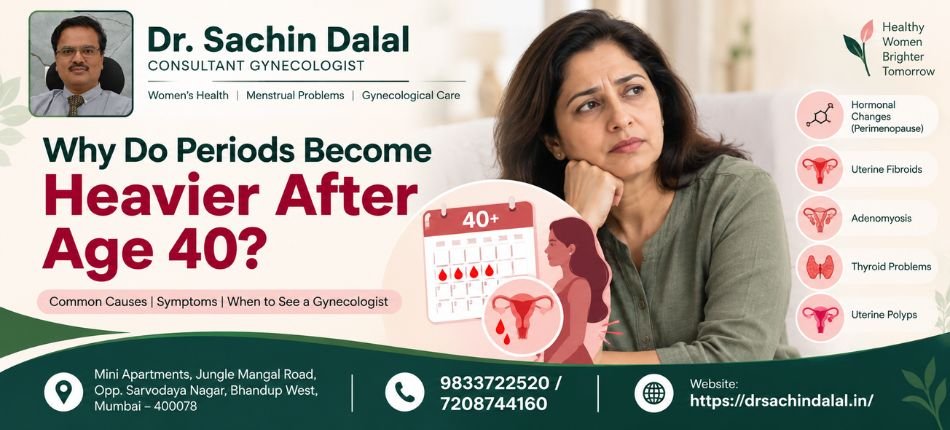
Why Do Periods Become Heavier After Age 40? | Heavy Periods After 40 – Dr. Sachin Dalal
As women enter their 40s, menstrual cycles can begin to change. Periods that were previously predictable may become irregular, last longer, arrive more frequently, or involve heavier bleeding. While hormonal changes associated with perimenopause are a common reason for these differences, heavy periods after 40 should not automatically be considered a normal part of ageing.
Heavy or prolonged menstrual bleeding can also be associated with conditions such as uterine fibroids, adenomyosis, uterine polyps, thyroid problems, or other gynecological conditions. Women experiencing persistent or unusual menstrual changes can consider a Gynecology Treatment consultation for appropriate evaluation and guidance based on their individual symptoms.
In this blog, we explain why periods may become heavier after age 40, what symptoms deserve attention, possible causes, how heavy menstrual bleeding is evaluated, and when you should consider consulting a gynecologist.
What Are Heavy Periods?
Heavy menstrual bleeding refers to menstrual bleeding that is unusually heavy or prolonged enough to interfere with normal activities or wellbeing.
Every woman’s cycle is different, so it is often more useful to notice a significant change from your usual menstrual pattern rather than focusing only on an exact amount of blood loss.
Possible signs of unusually heavy periods include needing to change sanitary protection much more frequently than usual, bleeding for more than about seven days, passing large blood clots, waking during the night to change sanitary protection, or feeling unusually weak or tired during or after periods.
Why Do Periods Become Heavier After Age 40?
Several hormonal and gynecological factors can contribute to heavier menstrual bleeding during the 40s.
1. Perimenopause and Hormonal Changes
Perimenopause is the transitional period leading up to menopause. During this stage, levels of hormones involved in the menstrual cycle can fluctuate.
These hormonal changes can affect ovulation and the way the uterine lining develops and sheds. As a result, some women experience heavier, longer, shorter, or more irregular periods.
Although menstrual changes are common during perimenopause, persistent or unusually heavy bleeding should still be discussed with a gynecologist.
2. Irregular Ovulation
As menopause approaches, ovulation may become less regular.
When ovulation does not occur normally, hormonal patterns can change and the uterine lining may build up differently than it did during earlier reproductive years. When the lining eventually sheds, bleeding can sometimes be heavier or last longer.
Irregular ovulation can therefore contribute to changes in both the timing and flow of periods after 40.
3. Uterine Fibroids
Fibroids are non-cancerous growths that develop in or around the uterus. They are common during the reproductive years and may contribute to heavy or prolonged menstrual bleeding in some women.
Depending on their size and location, fibroids may also be associated with pelvic pressure, discomfort, frequent urination, abdominal fullness, or other symptoms.
Not every fibroid requires treatment. A gynecologist can assess whether fibroids are likely to be contributing to the bleeding and recommend management based on symptoms and individual circumstances.
4. Adenomyosis
Adenomyosis occurs when tissue similar to the uterine lining grows into the muscular wall of the uterus.
It can be associated with heavy menstrual bleeding, painful periods, pelvic discomfort, or a feeling of pressure or heaviness.
Symptoms vary considerably between individuals, so medical evaluation may be needed to distinguish adenomyosis from other causes of heavy periods.
5. Uterine Polyps
Uterine or endometrial polyps are growths that develop from the inner lining of the uterus.
Some polyps cause no symptoms, while others may be associated with heavy periods, irregular bleeding, spotting between periods, or bleeding at unexpected times.
If abnormal bleeding occurs, a gynecologist may recommend tests to determine whether polyps or another uterine condition are involved.
6. Thyroid-Related Problems
The thyroid gland plays an important role in regulating many body functions, and thyroid disorders can sometimes affect menstrual patterns.
Depending on the condition, periods may become heavier, lighter, or irregular. When menstrual changes occur alongside symptoms suggestive of thyroid dysfunction, a doctor may recommend appropriate blood tests as part of the evaluation.
7. Certain Medicines and Medical Conditions
Some medicines and underlying medical conditions can influence menstrual bleeding. For example, certain medicines that affect blood clotting may contribute to heavier bleeding in some people.
For this reason, it is important to tell your gynecologist about all medicines, supplements, existing medical conditions, and recent changes in your health.
Do not stop prescribed medication without consulting the healthcare professional who prescribed it.
Are Heavy Periods After 40 Normal?
Changes in menstrual patterns can occur during perimenopause, but this does not mean every episode of heavy bleeding should simply be ignored.
A noticeable change from your usual cycle deserves attention, particularly when bleeding is becoming progressively heavier, lasting longer, occurring between periods, or interfering with everyday life.
A gynecologist can help determine whether the bleeding is related to perimenopausal hormonal changes or another condition that requires treatment.
Symptoms You Should Not Ignore
Consider seeking medical advice if you experience:
- Periods that have become significantly heavier than usual
- Bleeding lasting longer than about seven days
- Frequent need to change sanitary protection because of heavy flow
- Large blood clots
- Bleeding or spotting between periods
- Bleeding after sexual intercourse
- New or worsening pelvic pain
- Unusual weakness, tiredness, dizziness, or shortness of breath
- Bleeding after menopause
Very heavy bleeding accompanied by fainting, severe weakness, difficulty breathing, chest pain, or other severe symptoms may require urgent medical attention.
Can Heavy Periods Cause Anemia?
Repeated heavy menstrual bleeding can contribute to iron-deficiency anemia because the body loses iron along with blood.
Possible symptoms can include tiredness, weakness, dizziness, headaches, reduced exercise tolerance, paleness, or shortness of breath.
If heavy periods are persistent, a doctor may recommend a blood test such as a complete blood count and, when appropriate, tests related to iron levels.
Iron supplements should ideally be taken according to medical advice rather than assuming that every case of tiredness is caused by iron deficiency.
How Are Heavy Periods After 40 Evaluated?
The evaluation depends on the patient’s age, symptoms, menstrual history, medical history, medicines, and other individual risk factors.
A gynecologist may first ask about how long the bleeding lasts, how heavy it is, whether clots are present, whether bleeding occurs between periods, and whether there is pelvic pain or other symptoms.
Depending on the clinical situation, evaluation may include a physical or pelvic examination, blood tests, pregnancy testing when relevant, thyroid testing, ultrasound, or other investigations.
In some situations, particularly when abnormal uterine bleeding occurs in women aged 45 or older or when certain risk factors are present, additional evaluation of the uterine lining may be considered. The appropriate investigation should be determined by the treating gynecologist.
Why Is an Ultrasound Sometimes Recommended?
A pelvic ultrasound can help the doctor examine the uterus and ovaries.
It may help identify structural conditions such as fibroids, certain polyps, ovarian abnormalities, or features that may suggest adenomyosis, although not every condition can be diagnosed through ultrasound alone.
Whether an ultrasound or another investigation is required depends on the individual’s symptoms and clinical examination.
Treatment for Heavy Periods After 40
Treatment is not the same for every woman because heavy menstrual bleeding can have several different causes.
Management depends on factors such as the underlying diagnosis, severity of bleeding, presence of anemia, other health conditions, medicines being taken, age, and personal preferences.
Depending on the situation, a gynecologist may discuss medication-based treatment, hormonal options, treatment for iron deficiency, or procedures aimed at addressing a specific underlying condition.
Surgery is not automatically required simply because periods have become heavy. The treatment approach should be individualized after proper evaluation.
What Can You Do Before Your Gynecology Appointment?
Keeping a simple record of your menstrual cycle can make your consultation more useful.
Note when your period begins and ends, whether the flow is lighter or heavier than usual, how frequently you need to change sanitary protection, whether you pass large clots, and whether you experience pain, dizziness, fatigue, or bleeding between periods.
Also keep a list of medicines and supplements you currently take.
This information can help your gynecologist understand how your menstrual pattern has changed.
Heavy Periods After 40 and Perimenopause
Perimenopause can begin several years before the final menstrual period, and cycle changes are common during this transition.
Some months may involve heavier bleeding, while others may involve lighter periods, skipped cycles, or changes in cycle length. However, attributing every change to perimenopause without evaluation can potentially overlook another cause.
Women experiencing persistent or concerning changes should therefore discuss them with a healthcare professional rather than relying solely on age as an explanation.
When Should You Consult a Gynecologist?
You should consider consulting a gynecologist when heavy periods are new, persistent, worsening, interfering with normal life, or accompanied by other unusual symptoms.
Medical evaluation is particularly important if there is bleeding between periods, bleeding after intercourse, significant pelvic pain, symptoms of anemia, or any bleeding after menopause.
The objective of consultation is not simply to reduce bleeding but to understand why the bleeding pattern has changed and choose appropriate management based on the cause.
Gynecological Consultation with Dr. Sachin Dalal
If you are experiencing heavy periods after 40, prolonged menstrual bleeding, irregular cycles, spotting, blood clots, or other changes in your menstrual pattern, a gynecological consultation can help evaluate the possible cause.
Dr. Sachin Dalal provides gynecological consultation for women’s health concerns, including menstrual problems and abnormal uterine bleeding. Evaluation and treatment recommendations are based on individual symptoms, medical history, examination, and investigations where clinically appropriate.
Early evaluation can be particularly useful when menstrual changes are persistent or significantly different from your previous cycle pattern.
Conclusion
Periods can change considerably after age 40, particularly as women enter perimenopause. Hormonal fluctuations and irregular ovulation are common explanations, but heavy periods after 40 can also be associated with fibroids, adenomyosis, uterine polyps, thyroid disorders, medicines, and other gynecological conditions.
Instead of assuming that unusually heavy bleeding is simply part of getting older, pay attention to changes in your usual menstrual pattern. Persistent heavy bleeding, prolonged periods, large clots, bleeding between periods, pelvic pain, or symptoms such as weakness and dizziness deserve madical attention.
A gynecological evaluation can help identify the underlying cause and guide an appropriate treatment plan based on your individual health needs.
This article is for general educational purposes and is not a substitute for individual medical diagnosis or treatment.
Heavy Periods After 40 Heavy Periods After 40 Heavy Periods After 40 Heavy Periods After 40 Heavy Periods After 40 Heavy Periods After 40 Heavy Periods After 40 Heavy Periods After 40 Heavy Periods After 40 Heavy Periods After 40 Heavy Periods After 40 Heavy Periods After 40 Heavy Periods After 40 Heavy Periods After 40