
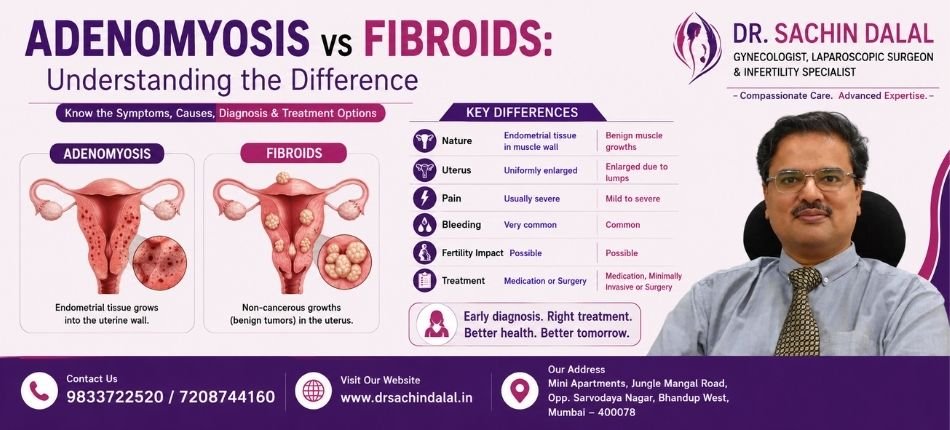
Adenomyosis vs Fibroids: Understanding the Difference | Adenomyosis vs Fibroids – Dr. Sachin Dalal
Heavy menstrual bleeding, painful periods, and chronic pelvic pain are common concerns among women of reproductive age. While these symptoms may appear similar, they are often caused by two different uterine conditions—adenomyosis and fibroids. Although both conditions affect the uterus and can significantly impact a woman’s quality of life, they differ in their origin, diagnosis, and treatment options.
Understanding adenomyosis vs fibroids helps women seek timely medical care and choose the most appropriate treatment based on their symptoms and future pregnancy plans.
What Is Adenomyosis?
Adenomyosis is a condition in which the tissue that normally lines the inside of the uterus (endometrium) grows into the muscular wall of the uterus (myometrium). During every menstrual cycle, this misplaced tissue thickens and bleeds, leading to inflammation, uterine enlargement, severe menstrual cramps, and heavy bleeding. The condition is more commonly diagnosed in women between 35 and 50 years of age and may be associated with previous childbirth or uterine surgery. Although the exact cause is unknown, hormonal changes are believed to play a major role in its development.
What Are Uterine Fibroids?
Uterine fibroids, also known as leiomyomas, are non-cancerous tumors that develop from the smooth muscle cells of the uterus. Fibroids can occur as a single growth or multiple growths and may vary greatly in size. Some women experience no symptoms, while others develop excessive menstrual bleeding, pelvic pressure, abdominal swelling, frequent urination, constipation, or fertility issues. Fibroids are influenced by estrogen and progesterone and are one of the most common gynecological conditions among women of reproductive age.
Adenomyosis vs Fibroids: Major Differences
Although both conditions affect the uterus, they differ in several important ways.
| Feature | Adenomyosis | Fibroids |
|---|---|---|
| Nature | Endometrial tissue grows into uterine muscle | Benign muscle growths inside the uterus |
| Uterine Appearance | Uniform enlargement | Enlarged due to one or more fibroids |
| Pain | Usually severe | Mild to severe depending on size and location |
| Heavy Menstrual Bleeding | Very common | Common |
| Fertility Impact | Possible | Possible |
| Treatment | Medication or surgery | Medication, myomectomy, or minimally invasive procedures |
Common Symptoms
Both adenomyosis and fibroids can produce similar symptoms, making diagnosis difficult without imaging tests. Women may experience heavy menstrual bleeding, prolonged periods, severe menstrual cramps, chronic pelvic pain, lower back pain, pain during intercourse, pelvic pressure, frequent urination, constipation, fatigue caused by anemia, and difficulty conceiving. Because these symptoms overlap, a thorough evaluation by a gynecologist is essential to determine the exact cause.
Causes and Risk Factors
The exact cause of adenomyosis remains uncertain, but hormonal influences, previous pregnancies, cesarean deliveries, uterine surgeries, and increasing age are considered important risk factors. Fibroids, on the other hand, are strongly associated with genetic predisposition, hormonal stimulation by estrogen and progesterone, obesity, early onset of menstruation, and family history. Lifestyle factors may also contribute to their development.
How Are They Diagnosed?
Diagnosis begins with a detailed medical history and pelvic examination. Imaging studies such as transvaginal ultrasound and MRI help distinguish adenomyosis from fibroids by showing the structure of the uterine wall and identifying any abnormal growths. Blood tests may also be recommended if heavy bleeding has caused anemia. Accurate diagnosis is essential because treatment strategies differ for each condition.
Treatment Options
Treatment depends on several factors, including the severity of symptoms, the woman’s age, reproductive goals, and the extent of the disease. Mild cases may be managed with pain relievers, hormonal medications, or hormonal intrauterine devices (IUDs). Women with symptomatic fibroids may benefit from minimally invasive procedures such as myomectomy or uterine artery embolization. In severe cases of adenomyosis or when family planning is complete, hysterectomy may be considered. The treatment plan is always individualized to provide the best possible outcome.
When Should You Consult a Gynecologist?
You should seek medical advice if you experience menstrual bleeding lasting longer than seven days, severe pelvic pain, large blood clots during periods, frequent urination due to pelvic pressure, persistent lower abdominal discomfort, or difficulty becoming pregnant. Early consultation can help prevent complications such as anemia, chronic pain, and fertility issues while improving treatment success.
Why Choose Dr. Sachin Dalal?
Dr. Sachin Dalal provides comprehensive care for women with adenomyosis, fibroids, and other gynecological conditions. Using advanced diagnostic tools and minimally invasive treatment techniques, he creates personalized treatment plans that focus on symptom relief, fertility preservation whenever possible, and improved long-term reproductive health.
Conclusion
Although adenomyosis and fibroids often present with similar symptoms, they are different conditions requiring different treatment approaches. Understanding the distinction between adenomyosis vs fibroids enables women to seek early diagnosis and appropriate care. If you are experiencing heavy periods, pelvic pain, or fertility concerns, consult Dr. Sachin Dalal for expert evaluation and personalized treatment.
Adenomyosis vs Fibroids Adenomyosis vs Fibroids Adenomyosis vs Fibroids Adenomyosis vs Fibroids Adenomyosis vs Fibroids Adenomyosis vs Fibroids Adenomyosis vs Fibroids Adenomyosis vs Fibroids Adenomyosis vs Fibroids Adenomyosis vs Fibroids Adenomyosis vs Fibroids Adenomyosis vs Fibroids