
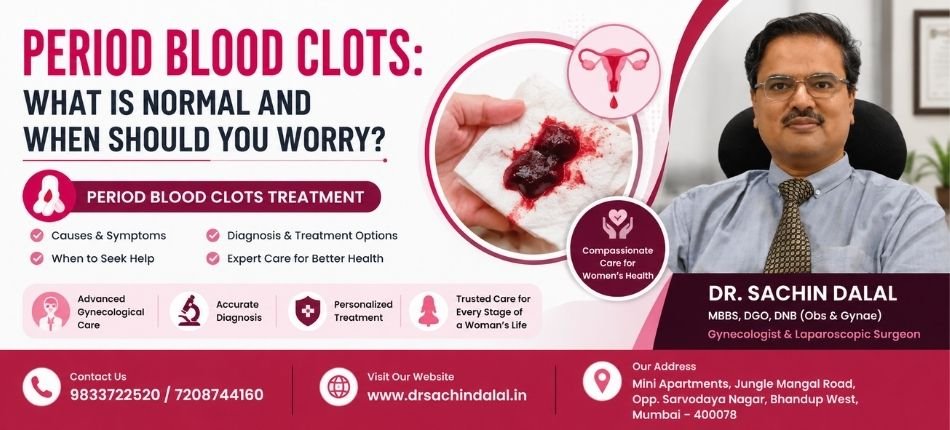
Period Blood Clots: What Is Normal and When Should You Worry? | Period Blood Clots Treatment- Dr. Sachin Dalal
Many women notice period blood clots during menstruation and often wonder whether they are normal or a sign of an underlying health problem. While passing small blood clots during heavy menstrual flow is common, large or frequent clots may indicate conditions that require medical attention.
Learn about Period Blood Clots Treatment, common causes, symptoms, diagnosis, and when to seek medical help. Consult Dr. Sachin Dalal in Mumbai for expert gynecological care and personalized treatment
What Are Period Blood Clots?
Period blood clots are thick, jelly-like collections of blood, uterine lining tissue, and proteins that help regulate blood flow during menstruation.
The body naturally produces clotting proteins to prevent excessive blood loss. When menstrual flow becomes heavy, these proteins may not break down the blood quickly enough, leading to clot formation.
Small blood clots, especially during the first two days of menstruation, are generally considered normal.
When Are Period Blood Clots Normal?
Blood clots are usually not a cause for concern if they are:
- Smaller than a coin
- Bright or dark red
- Passed during the heaviest days of menstruation
- Occasional rather than frequent
- Not accompanied by severe pain
Many women experience these clots occasionally without any underlying medical condition.
When Should You Be Concerned?
Although small period blood clots are often a normal part of menstruation, certain symptoms should never be ignored. You should consult a gynecologist if you consistently pass large blood clots (larger than a ₹10 coin), experience extremely heavy bleeding that soaks through a sanitary pad or tampon every hour, or have periods lasting longer than seven days. Severe pelvic pain, bleeding between menstrual cycles, irregular periods, dizziness, fatigue, or shortness of breath may indicate conditions such as uterine fibroids, adenomyosis, hormonal imbalances, endometriosis, or even anemia caused by excessive blood loss. Seeking medical attention early can help identify the underlying cause and prevent complications.
Causes of Large Period Blood Clots
Uterine Fibroids
Fibroids are non-cancerous growths in the uterus that may cause heavy bleeding and large clots.
Adenomyosis
This condition occurs when the uterine lining grows into the muscular wall of the uterus, causing painful and heavy periods.
Hormonal Imbalance
Hormones regulate the growth and shedding of the uterine lining. Any imbalance can result in excessive bleeding.
Polycystic Ovary Syndrome (PCOS)
Women with PCOS may develop irregular periods with occasional heavy bleeding and clots.
Miscarriage
Heavy bleeding with large clots during pregnancy requires immediate medical attention.
Endometriosis
Endometriosis may contribute to painful periods and abnormal bleeding.
Symptoms That Require Immediate Medical Care
Seek emergency medical attention if you experience:
- Extremely heavy bleeding
- Passing golf ball-sized clots
- Severe abdominal pain
- Fainting
- Difficulty breathing
- Symptoms of severe anemia
How Are Period Blood Clots Diagnosed?
Diagnosing the cause of period blood clots begins with a detailed discussion of your menstrual history, including the duration, flow, frequency of clots, and associated symptoms. Your gynecologist may perform a pelvic examination to check for any abnormalities in the reproductive organs. Depending on your symptoms, additional investigations such as blood tests may be recommended to evaluate anemia, hormone levels, or clotting disorders. A pelvic ultrasound is commonly used to detect uterine fibroids, ovarian cysts, polyps, or adenomyosis. In some cases, advanced procedures like hysteroscopy or endometrial biopsy may be advised to examine the uterus more closely and rule out serious conditions. An accurate diagnosis ensures that the treatment addresses the root cause rather than just the symptoms.
Treatment Options
The treatment for period blood clots depends entirely on the underlying cause and the severity of your symptoms. If hormonal imbalance is responsible, hormonal medications or birth control pills may help regulate the menstrual cycle and reduce heavy bleeding. Medicines such as tranexamic acid can decrease menstrual blood loss, while pain relievers may ease cramps and discomfort. Women diagnosed with anemia due to excessive bleeding may require iron supplements. If structural problems like uterine fibroids, polyps, or adenomyosis are identified, minimally invasive procedures such as hysteroscopic removal or laparoscopic surgery may be recommended. In severe or persistent cases where conservative treatments are ineffective, surgical options may be considered. A personalized treatment plan developed by a qualified gynecologist can effectively control symptoms and improve overall reproductive health.
Can Lifestyle Changes Help?
Yes. Healthy lifestyle habits can support menstrual health.
Recommendations include:
- Eat iron-rich foods
- Stay hydrated
- Maintain a healthy weight
- Exercise regularly
- Manage stress
- Avoid smoking
When Should You Visit a Gynecologist?
You should schedule a visit to a gynecologist if your menstrual bleeding suddenly becomes much heavier than usual, you regularly pass large blood clots, or your periods interfere with your daily activities. Persistent pelvic pain, bleeding after menopause, bleeding during pregnancy, irregular menstrual cycles, or symptoms of anemia such as weakness, fatigue, or dizziness also require prompt medical evaluation. Many gynecological conditions can be treated successfully when diagnosed early, helping prevent complications such as chronic anemia, fertility issues, or worsening uterine disorders. If you are uncertain whether your menstrual symptoms are normal, consulting an experienced gynecologist like Dr. Sachin Dalal can provide reassurance, an accurate diagnosis, and the most appropriate treatment plan.
Conclusion
Although period blood clots are often a normal part of menstruation, unusually large or frequent clots should never be ignored. Identifying the cause early allows effective treatment and helps prevent complications such as anemia or worsening gynecological conditions.
If you are concerned about heavy periods or abnormal menstrual bleeding, consult Dr. Sachin Dalal for expert evaluation and personalized treatment.
Period Blood Clots Treatment Period Blood Clots Treatment Period Blood Clots Treatment Period Blood Clots Treatment Period Blood Clots Treatment Period Blood Clots Treatment Period Blood Clots Treatment Period Blood Clots Treatment Period Blood Clots Treatment Period Blood Clots Treatment Period Blood Clots Treatment