
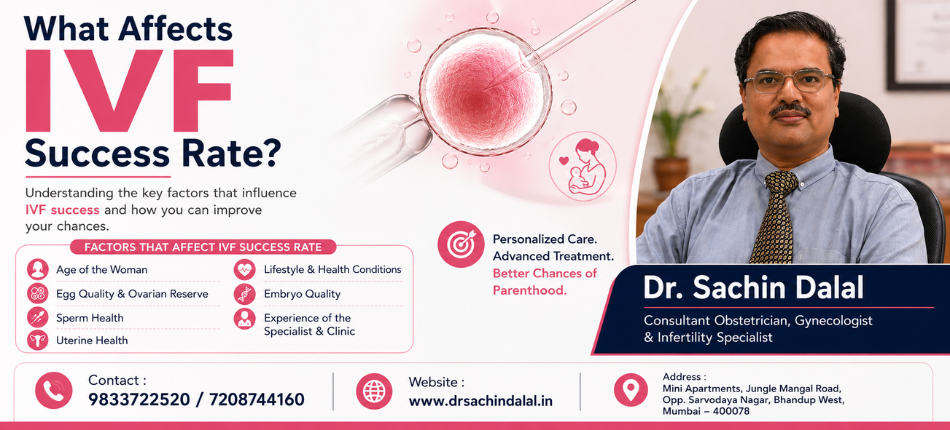
What Affects IVF Success Rate? Important Factors Every Couple Should Know – Dr. Sachin Dalal
Introduction
What is IVF?
IVF, or In Vitro Fertilization, is an advanced fertility treatment in which eggs are retrieved from the ovaries and fertilized with sperm in a laboratory. The fertilized embryo is then transferred into the uterus to achieve pregnancy. IVF is commonly recommended for couples facing infertility due to conditions such as blocked fallopian tubes, low sperm count, ovulation disorders, endometriosis, or unexplained infertility.
Factors That Affect IVF Success Rate
1. Age of the Woman
Age is one of the most important factors affecting IVF success. Women under the age of 35 generally have higher IVF success rates because egg quality and ovarian reserve are better. As age increases, both the quantity and quality of eggs decline, which may reduce the chances of successful fertilization and implantation.
Women above 35 may require additional fertility support, advanced embryo testing, or multiple IVF cycles depending on their condition.
2. Egg Quality and Ovarian Reserve
Healthy eggs play a major role in successful IVF treatment. Poor egg quality can affect embryo development and implantation. Ovarian reserve refers to the number of eggs remaining in the ovaries.
Doctors may recommend tests such as AMH (Anti-Müllerian Hormone) levels and ultrasound scans to evaluate ovarian reserve before starting IVF treatment.
3. Sperm Health
Male fertility also significantly impacts IVF success rates. Sperm count, motility, and morphology are important factors in fertilization. Low sperm quality may reduce the chances of healthy embryo formation.
In some cases, advanced procedures like ICSI (Intracytoplasmic Sperm Injection) may be recommended to improve fertilization outcomes.
4. Uterine Health
A healthy uterus is essential for successful embryo implantation. Conditions such as fibroids, polyps, scar tissue, or hormonal imbalances may affect implantation and pregnancy success.
A fertility specialist may recommend scans or hysteroscopy to assess uterine health before embryo transfer.
5. Lifestyle and Health Conditions
Lifestyle habits can directly affect fertility and IVF outcomes. Smoking, alcohol consumption, obesity, poor diet, stress, and lack of sleep may reduce fertility and embryo implantation rates.
Maintaining a healthy lifestyle with proper nutrition, regular exercise, and stress management can improve overall reproductive health.
6. Underlying Medical Conditions
Conditions such as PCOS, endometriosis, thyroid disorders, diabetes, or autoimmune diseases can impact IVF success rates. Proper medical management before and during IVF treatment is important to improve pregnancy chances.
An experienced fertility specialist can create a customized treatment plan based on the patient’s medical history.
7. Embryo Quality
The quality of the embryo plays a crucial role in IVF success. Healthy embryos have better implantation potential and higher chances of developing into a successful pregnancy.
Advanced laboratory techniques and embryo monitoring systems help improve embryo selection during IVF treatment.
8. Experience of the Fertility Specialist and Clinic
Choosing an experienced fertility specialist and a well-equipped IVF center can make a significant difference in treatment outcomes. Proper diagnosis, individualized treatment planning, advanced technology, and continuous monitoring help improve IVF success rates.
Tips to Improve IVF Success Rate
1. Follow Medical Advice Carefully
Patients should follow all medications, injections, and fertility instructions provided by the doctor for better treatment outcomes.
2. Maintain a Healthy Lifestyle
Eating nutritious food, staying active, avoiding smoking and alcohol, and maintaining healthy body weight may positively affect fertility.
3. Reduce Stress
Emotional stress can affect hormonal balance. Meditation, yoga, counseling, and emotional support may help patients during IVF treatment.
4. Attend Regular Follow-Ups
Regular monitoring helps doctors track follicle development, hormone levels, and embryo growth for timely medical decisions.
When Should You Consider IVF?
Couples may consider IVF if they experience:
- Difficulty conceiving for more than one year
- Blocked fallopian tubes
- Severe male infertility
- Ovulation disorders
- Endometriosis
- Recurrent pregnancy loss
- Failed fertility treatments
Early fertility evaluation can help identify the right treatment option.
Conclusion
IVF success depends on multiple factors including age, egg quality, sperm health, uterine condition, lifestyle, and medical history. Every couple’s fertility journey is different, and personalized treatment plays a key role in achieving positive outcomes.
If you are facing infertility challenges and looking for expert fertility guidance, consult Dr. Sachin Dalal for advanced fertility evaluation and IVF treatment support in Mumbai.
IVF treatment in Bhandup IVF treatment in Bhandup IVF treatment in Bhandup IVF treatment in Bhandup IVF treatment in Bhandup IVF treatment in Bhandup IVF treatment in Bhandup IVF treatment in Bhandup