
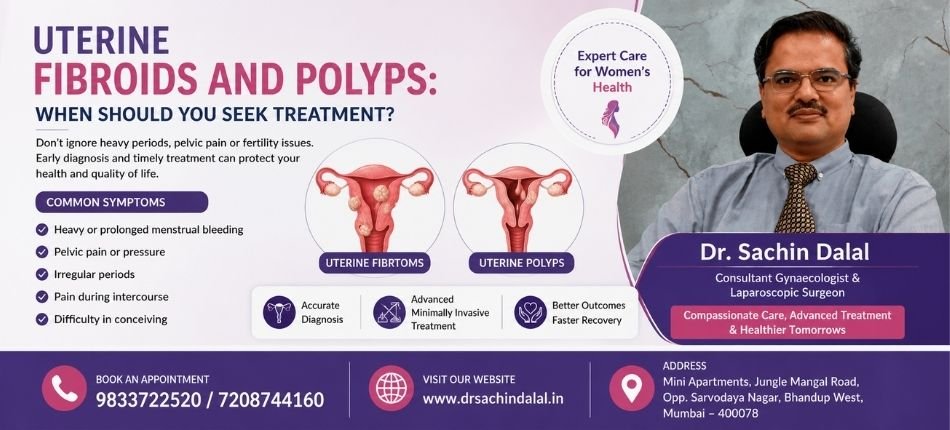
Uterine Fibroids and Polyps: When Should You Seek Treatment? |Fibroid Treatment in Mumbai – Dr. Sachin Dalal
Introduction
Uterine fibroids and uterine polyps are two common gynecological conditions that affect women of different age groups, particularly during their reproductive years. Although both conditions are usually non-cancerous, they can lead to heavy menstrual bleeding, pelvic pain, infertility, and other health concerns if left untreated. Understanding the symptoms and knowing when to seek medical care can help prevent complications and improve your quality of life.
If you are experiencing persistent menstrual problems or pelvic discomfort, consulting an experienced gynecologist for Fibroid Treatment in Mumbai is the best step toward accurate diagnosis and effective treatment.
What Are Uterine Fibroids?
Uterine fibroids are non-cancerous growths that develop within or around the uterus. They vary in size, number, and location. Some women have no symptoms, while others experience severe discomfort depending on the size and position of the fibroids.
Common Symptoms of Uterine Fibroids
- Heavy or prolonged menstrual bleeding
- Severe menstrual cramps
- Pelvic pressure or pain
- Frequent urination
- Constipation
- Pain during intercourse
- Difficulty conceiving
- Recurrent miscarriages in some cases
What Are Uterine Polyps?
Uterine polyps are soft tissue growths that develop on the inner lining of the uterus (endometrium). They are generally benign but may sometimes cause abnormal uterine bleeding and fertility issues.
Common Symptoms of Uterine Polyps
- Irregular menstrual cycles
- Heavy menstrual bleeding
- Bleeding between periods
- Bleeding after menopause
- Difficulty becoming pregnant
- Spotting after intercourse
When Should You Seek Treatment?
Many women ignore abnormal bleeding or pelvic pain, assuming it is part of a normal menstrual cycle. However, medical evaluation becomes important if you experience:
Heavy Menstrual Bleeding
Excessive bleeding that affects your daily routine or causes anemia should never be ignored.
Persistent Pelvic Pain
Ongoing pelvic discomfort or pressure may indicate large fibroids requiring medical treatment.
Fertility Problems
Fibroids and polyps can interfere with implantation and pregnancy. Women planning pregnancy should seek evaluation if conception is delayed.
Frequent Urination or Constipation
Large fibroids may press against nearby organs, leading to bladder and bowel symptoms.
Bleeding After Menopause
Any vaginal bleeding after menopause requires immediate medical examination to rule out serious conditions.
Diagnosis of Fibroids and Polyps
Accurate diagnosis is essential for determining the size, location, and type of uterine fibroids or polyps so that the most appropriate treatment can be planned. Your gynecologist will begin with a detailed medical history and pelvic examination, followed by imaging tests such as a pelvic or transvaginal ultrasound to visualize the uterus. In certain cases, advanced diagnostic procedures like hysteroscopy allow the doctor to examine the inside of the uterus directly, while MRI scans may be recommended for larger or multiple fibroids. If necessary, an endometrial biopsy may also be performed to rule out abnormal or cancerous changes. Early and precise diagnosis helps identify the condition before complications arise and ensures timely, personalized treatment.
Treatment Options
Treatment depends on your age, symptoms, future pregnancy plans, and the size of the fibroids or polyps.
Medication
Medicines may help control bleeding, pain, and hormone-related symptoms.
Minimally Invasive Procedures
Small polyps can often be removed using hysteroscopy with minimal discomfort and faster recovery.
Laparoscopic Surgery
Large fibroids causing significant symptoms can be removed using advanced laparoscopic surgery, resulting in smaller incisions, less pain, and quicker recovery.
Hysterectomy
In severe cases where symptoms are persistent and childbearing is complete, removal of the uterus may be recommended.
Why Early Treatment Is Important
Seeking treatment at the right time can prevent uterine fibroids and polyps from causing more serious health problems. If left untreated, these conditions may lead to heavy menstrual bleeding, chronic pelvic pain, anemia, fertility issues, recurrent miscarriages, and complications during pregnancy. Early treatment not only relieves symptoms but also allows access to minimally invasive procedures that often involve smaller incisions, less pain, and quicker recovery. Timely medical intervention can help preserve the uterus, improve reproductive health, enhance overall quality of life, and reduce the likelihood of requiring more extensive surgery in the future.
Why Choose Dr. Sachin Dalal?
Dr. Sachin Dalal provides comprehensive diagnosis and advanced treatment for uterine fibroids and polyps using the latest minimally invasive surgical techniques. With years of experience in gynecology and laparoscopic surgery, he offers personalized treatment plans that focus on patient comfort, faster recovery, and excellent clinical outcomes.
Conclusion
Uterine fibroids and polyps are treatable conditions when diagnosed early. If you are experiencing abnormal bleeding, pelvic pain, or fertility concerns, do not delay seeking expert medical advice. Early diagnosis and appropriate treatment can significantly improve your reproductive health and overall well-being.
Fibroid Treatment in Mumbai Fibroid Treatment in Mumbai Fibroid Treatment in Mumbai Fibroid Treatment in Mumbai Fibroid Treatment in Mumbai Fibroid Treatment in Mumbai Fibroid Treatment in Mumbai