
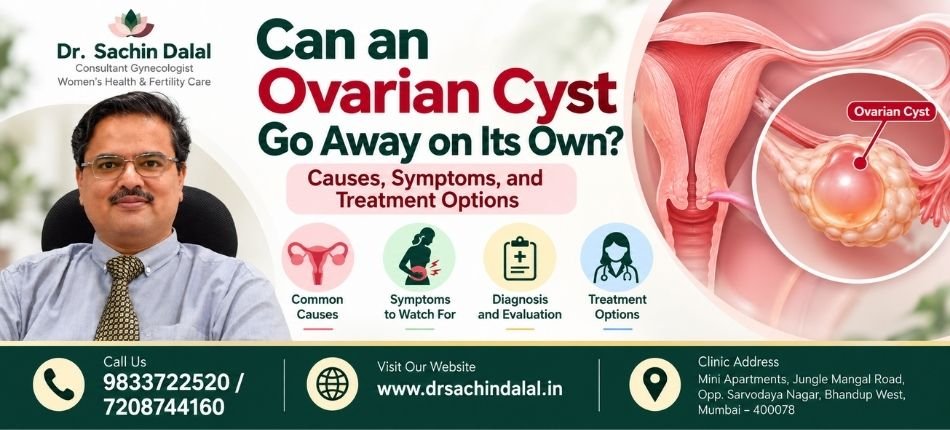
Can an Ovarian Cyst Go Away on Its Own? Causes, Symptoms, and Treatment Options – Dr. Sachin Dalal
Ovarian cysts are a common gynecological condition affecting women of reproductive age. Many women discover ovarian cysts during a routine ultrasound examination, while others experience symptoms such as pelvic pain, abdominal bloating, or changes in their menstrual cycle. One of the most frequently asked questions is, “Can ovarian cyst go away on its own?”
The answer is yes. Many ovarian cysts, particularly functional cysts associated with the menstrual cycle, disappear naturally within a few weeks or months without requiring surgery. However, not every ovarian cyst resolves on its own. Some cysts may persist, increase in size, or require medical treatment depending on their type, appearance, and associated symptoms.
At Dr. Sachin Dalal’s Gynecology Clinic in Bhandup West, women can seek gynecological consultation for ovarian cyst evaluation, pelvic pain, menstrual irregularities, and other reproductive health concerns.
Understanding the causes, symptoms, and treatment options for ovarian cysts can help women recognize when observation is appropriate and when medical attention is necessary.
1. What Is an Ovarian Cyst?
An ovarian cyst is a fluid-filled or partially solid sac that develops inside or on the surface of an ovary. The ovaries are part of the female reproductive system and are responsible for releasing eggs and producing hormones such as estrogen and progesterone.
During a normal menstrual cycle, small fluid-filled structures called follicles develop in the ovaries. Occasionally, a follicle does not release an egg or fails to shrink after ovulation, resulting in a functional ovarian cyst.
Most ovarian cysts are benign (non-cancerous), particularly in women of reproductive age. Many cause no noticeable symptoms and are discovered incidentally during an ultrasound examination.
However, certain ovarian cysts can cause discomfort, affect ovarian function, or lead to complications. Therefore, identifying the type of cyst is important for determining the appropriate management approach.
2. Can an Ovarian Cyst Go Away on Its Own?
Yes, many ovarian cysts can go away on their own without medical or surgical treatment. This is particularly common with functional ovarian cysts that develop during the normal menstrual cycle.
These cysts often disappear within two to three menstrual cycles, although the exact time varies from person to person.
Whether an ovarian cyst resolves naturally depends on several factors:
-
Type of Cyst: Functional cysts are more likely to disappear naturally than endometriomas or dermoid cysts.
-
Size of the Cyst: Smaller, simple cysts are often suitable for observation, although size alone does not determine management.
-
Ultrasound Appearance: A simple fluid-filled cyst is generally less concerning than one with complex or solid features.
-
Age and Menopausal Status: Cysts occurring after menopause require a different assessment.
-
Symptoms: Persistent pain, pressure, or other symptoms may require further investigation.
A gynecologist may recommend watchful waiting, which involves monitoring the cyst over time and repeating an ultrasound when clinically appropriate.
Importantly, a cyst should not be assumed to be harmless simply because it causes no pain.
3. Types of Ovarian Cysts and Their Chances of Disappearing Naturally
Different types of ovarian cysts behave differently. Understanding the type of cyst helps determine whether natural resolution is likely.
Functional Ovarian Cysts
Functional cysts are associated with normal ovulation and are among the most common ovarian cysts in premenopausal women.
Follicular Cysts: These develop when a follicle fails to release an egg and continues to accumulate fluid. Most follicular cysts disappear naturally within a few menstrual cycles.
Corpus Luteum Cysts: These occur when the structure remaining after ovulation fills with fluid or blood. Many resolve naturally, although some may cause pain or bleeding.
Hemorrhagic Ovarian Cysts
Hemorrhagic cysts contain blood and often develop from functional cysts. Many resolve spontaneously over several weeks.
A follow-up ultrasound may be recommended depending on their size, appearance, and the patient’s age and symptoms.
Dermoid Cysts
Dermoid cysts, also called mature cystic teratomas, can contain different types of tissue, such as fat or hair.
These cysts generally do not disappear on their own. Depending on their size, symptoms, and characteristics, observation or surgery may be recommended.
Endometriomas
Endometriomas are ovarian cysts associated with endometriosis. They contain old blood and are sometimes called chocolate cysts.
Unlike functional cysts, endometriomas usually do not resolve spontaneously. Management depends on pain, cyst size, fertility goals, and other clinical factors.
Cystadenomas
Cystadenomas are generally benign ovarian growths that may contain fluid or mucus-like material. They are not typical functional cysts and may persist or grow.
A gynecologist determines whether monitoring or surgery is appropriate.
Quick Comparison of Ovarian Cyst Types
| Type of Ovarian Cyst | Can It Disappear Naturally? |
|---|---|
| Follicular Cyst | Often yes |
| Corpus Luteum Cyst | Often yes |
| Hemorrhagic Cyst | Often yes |
| Dermoid Cyst | Generally no |
| Endometrioma | Usually persists |
| Cystadenoma | Generally does not resolve spontaneously |
4. What Causes Ovarian Cysts?
Ovarian cysts can develop for several reasons, including hormonal changes, ovulation-related processes, and underlying gynecological conditions.
Hormonal Changes During the Menstrual Cycle
Normal hormonal fluctuations influence follicle development and ovulation. Occasionally, a follicle continues growing instead of releasing an egg, leading to a functional cyst.
Endometriosis
Endometriosis occurs when tissue similar to the uterine lining grows outside the uterus. When it affects the ovaries, it may cause endometriomas.
Pregnancy
A corpus luteum cyst may develop during early pregnancy. The corpus luteum supports hormone production during the early stages of pregnancy and usually regresses as pregnancy progresses.
Pelvic Infections
Severe pelvic infections can sometimes involve the ovaries and fallopian tubes, resulting in inflammatory masses or abscesses that require prompt medical assessment.
Fertility Treatments
Certain fertility medications that stimulate ovulation can increase the likelihood of developing enlarged follicles or functional ovarian cysts.
Not all ovarian cysts are caused by hormonal imbalance, and having an ovarian cyst does not necessarily mean a woman has polycystic ovary syndrome (PCOS).
5. Common Symptoms of Ovarian Cysts
Many ovarian cysts do not produce symptoms. However, larger cysts or those associated with complications may cause noticeable discomfort.
Common symptoms include:
-
Lower Abdominal Pain: Mild or persistent discomfort, sometimes more noticeable on one side.
-
Pelvic Pressure: A feeling of heaviness or fullness in the lower abdomen.
-
Abdominal Bloating: Swelling or discomfort that may become more noticeable with larger cysts.
-
Pain During Intercourse: Some cysts may cause discomfort during sexual activity.
-
Frequent Urination: A large cyst may press against the bladder.
-
Menstrual Changes: Some ovarian conditions associated with cysts may cause irregular periods, although menstrual irregularity is not specific to ovarian cysts.
These symptoms can also occur with other gynecological or abdominal conditions. An accurate diagnosis requires appropriate medical evaluation.
6. How Long Does It Take for an Ovarian Cyst to Disappear?
The time required for an ovarian cyst to disappear depends primarily on its type and characteristics.
Many functional ovarian cysts resolve within approximately 6–12 weeks, or a few menstrual cycles.
Some hemorrhagic cysts also resolve within several weeks, although follow-up timing depends on ultrasound findings.
A gynecologist may recommend a repeat ultrasound after an appropriate interval to determine whether the cyst has decreased in size, disappeared, or changed in appearance.
If the cyst remains unchanged, grows, or develops concerning features, further evaluation may be necessary.
It is important to understand that symptoms alone cannot reliably confirm whether a cyst has disappeared. Ultrasound examination is commonly used to assess its resolution.
7. How Are Ovarian Cysts Diagnosed?
A gynecologist may use several methods to evaluate an ovarian cyst.
Pelvic Ultrasound
Pelvic ultrasound is one of the most important diagnostic tools for ovarian cysts. It helps determine the cyst’s size, location, and internal appearance.
Ultrasound can identify whether a cyst is simple, complex, fluid-filled, or contains solid components.
Medical History and Physical Examination
The doctor may ask about menstrual cycles, pelvic pain, previous ovarian cysts, pregnancy possibility, and family medical history.
Pregnancy Test
A pregnancy test may be recommended when appropriate, particularly in women of reproductive age presenting with pelvic pain, to help exclude pregnancy-related conditions such as ectopic pregnancy.
Blood Tests
Blood tests may be recommended in selected situations. For example, CA-125 testing can be part of the assessment of certain ovarian masses, but it is not a definitive test for ovarian cancer and can be elevated in benign conditions.
The need for additional tests depends on ultrasound findings, age, symptoms, and individual risk factors.
8. When Does an Ovarian Cyst Require Treatment?
Although many ovarian cysts resolve naturally, some require medical treatment or surgery.
Treatment may be considered when:
The Cyst Continues to Grow: An enlarging cyst may require additional imaging or surgical assessment.
Persistent Pelvic Pain Occurs: Ongoing pain that affects daily activities may require treatment.
The Cyst Has Complex Features: Solid areas, irregular components, or other concerning ultrasound findings may require further investigation.
The Cyst Is Associated With Endometriosis: Endometriomas may require individualized management based on pain, fertility plans, and disease severity.
The Cyst Causes Complications: Ovarian torsion, rupture with significant bleeding, or other acute complications may require emergency treatment.
The Patient Is Postmenopausal: New ovarian cysts after menopause require careful assessment based on their characteristics and clinical risk factors.
Treatment decisions should be individualized rather than based only on cyst size.
9. Treatment Options for Ovarian Cysts
Watchful Waiting and Ultrasound Monitoring
For a simple ovarian cyst with reassuring characteristics and no significant symptoms, a gynecologist may recommend observation.
This approach allows time for the cyst to resolve naturally while ensuring that changes are identified when follow-up is indicated.
Medication for Symptom Relief
Pain-relieving medication may be recommended when appropriate to manage discomfort.
Hormonal contraceptives may sometimes be used to reduce the formation of new functional cysts, but they do not reliably make an existing functional cyst disappear faster.
Medication should be taken only according to medical advice.
Laparoscopic Ovarian Cyst Surgery
Laparoscopic surgery is a minimally invasive procedure that may be considered when a cyst requires removal.
Depending on the situation, the surgeon may attempt to remove the cyst while preserving healthy ovarian tissue.
The surgical approach depends on the cyst’s characteristics, size, suspected diagnosis, and the patient’s reproductive goals.
Open Surgery
In selected cases, open surgery may be necessary, particularly when a mass is very large or there is concern about malignancy.
A gynecologist will explain the benefits, risks, and appropriate treatment options based on the patient’s condition.
10. Can Lifestyle Changes Help Ovarian Cysts Disappear?
Healthy lifestyle habits support general reproductive health, but there is no reliable evidence that a particular diet, exercise routine, herbal remedy, or home treatment can directly dissolve an existing ovarian cyst.
Women can nevertheless support their overall well-being through balanced nutrition, regular physical activity, adequate sleep, and management of existing medical conditions.
For women with PCOS, individualized lifestyle measures may help improve metabolic health and menstrual regularity. However, PCOS involves multiple small ovarian follicles and is different from having a single functional ovarian cyst.
Avoid relying on unverified remedies or delaying medical assessment when symptoms persist.
11. Can an Ovarian Cyst Affect Pregnancy or Fertility?
Many functional ovarian cysts do not interfere with fertility and disappear without affecting the ability to conceive.
However, certain conditions associated with ovarian cysts may affect reproductive health.
For example, endometriosis can sometimes affect fertility, while PCOS may interfere with regular ovulation.
The effect of a cyst on fertility depends on the underlying condition, ovarian function, age, and treatment history.
If surgery is required, preserving ovarian tissue may be an important consideration for women planning future pregnancies.
Women experiencing difficulty conceiving should discuss their symptoms and fertility goals with a qualified gynecologist.
12. What Happens If an Ovarian Cyst Ruptures?
An ovarian cyst may occasionally rupture, releasing fluid or blood into the pelvic cavity.
Some ruptured cysts cause temporary discomfort and can be managed conservatively after medical evaluation.
However, rupture may sometimes cause significant bleeding or severe pain.
Possible warning signs include sudden pelvic pain, dizziness, fainting, weakness, or vomiting.
Seek urgent medical attention if severe or sudden pelvic pain occurs, particularly with dizziness, fainting, fever, or vomiting. These symptoms may indicate a ruptured cyst, ovarian torsion, ectopic pregnancy, or another emergency.
13. When Should You Consult a Gynecologist in Bhandup?
Women should consider a gynecological consultation if they experience persistent pelvic pain, recurring abdominal bloating, unusual pelvic pressure, or menstrual concerns.
A consultation is also appropriate when an ovarian cyst has been identified on ultrasound and the patient needs guidance about follow-up or treatment.
For women seeking evaluation in Bhandup West, Dr. Sachin Dalal provides a local point of contact for gynecological concerns.
Timely medical assessment can help determine whether an ovarian cyst is likely to disappear naturally or requires further investigation.
14. Ovarian Cyst Consultation with Dr. Sachin Dalal in Bhandup West
Understanding can ovarian cyst go away on its own is important, but every ovarian cyst should be assessed according to its individual characteristics.
Dr. Sachin Dalal’s clinic in Bhandup West, Mumbai, can be contacted for gynecological consultation concerning ovarian cyst symptoms, menstrual health, and reproductive concerns.
A clinical assessment can help patients understand their ultrasound findings, available treatment options, and whether observation or additional management is appropriate.
Clinic Details
Dr. Sachin Dalal
Address: Mini Apartments, Jungle Mangal Road, Opp. Sarvodaya Nagar, Bhandup West, Mumbai – 400078
Contact: 9833722520 / 7208744160
Website: www.drsachindalal.in
Conclusion
So, can ovarian cyst go away on its own? Yes, many ovarian cysts, especially functional cysts, resolve naturally within a few menstrual cycles without surgery.
However, cysts associated with endometriosis, complex ultrasound findings, persistent symptoms, or other concerning features may require further evaluation and treatment.
Women should avoid self-diagnosis and seek medical guidance when experiencing persistent pelvic discomfort or unusual symptoms.
For ovarian cyst evaluation and gynecological consultation in Bhandup West, contact Dr. Sachin Dalal at 9833722520 / 7208744160 or visit Dr. Sachin Dalal’s official website.
Can Ovarian Cyst Go Away on Its Own Can Ovarian Cyst Go Away on Its Own Can Ovarian Cyst Go Away on Its Own Can Ovarian Cyst Go Away on Its Own Can Ovarian Cyst Go Away on Its Own Can Ovarian Cyst Go Away on Its Own Can Ovarian Cyst Go Away on Its Own Can Ovarian Cyst Go Away on Its Own Can Ovarian Cyst Go Away on Its Own Can Ovarian Cyst Go Away on Its Own Can Ovarian Cyst Go Away on Its Own Can Ovarian Cyst Go Away on Its Own Can Ovarian Cyst Go Away on Its Own Can Ovarian Cyst Go Away on Its Own Can Ovarian Cyst Go Away on Its Own Can Ovarian Cyst Go Away on Its Own Can Ovarian Cyst Go Away on Its Own Can Ovarian Cyst Go Away on Its Own Can Ovarian Cyst Go Away on Its Own Can Ovarian Cyst Go Away on Its Own Can Ovarian Cyst Go Away on Its Own Can Ovarian Cyst Go Away on Its Own Can Ovarian Cyst Go Away on Its Own Can Ovarian Cyst Go Away on Its Own Can Ovarian Cyst Go Away on Its Own