
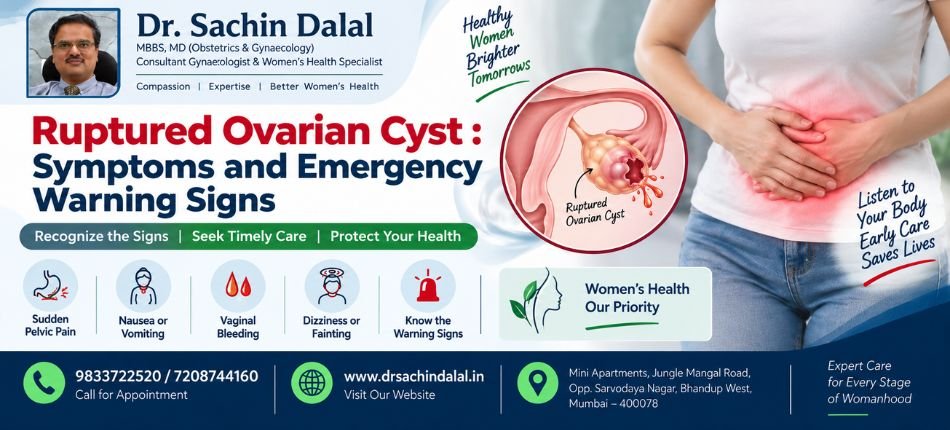
Ruptured Ovarian Cyst : Symptoms and Emergency Warning Signs- Dr. Sachin Dalal
Ovarian cysts are fluid-filled sacs that can develop on or within an ovary. Many ovarian cysts cause no symptoms and may resolve without treatment. However, in some cases, a cyst can rupture and release fluid or blood into the pelvis.
Women experiencing persistent or sudden pelvic symptoms can consult a trusted gynecologist in Bhandup for proper evaluation, diagnosis, and appropriate guidance based on their individual condition.
A Ruptured Ovarian Cyst may cause sudden pelvic or lower abdominal pain. Some ruptures cause relatively mild symptoms, while others can lead to significant internal bleeding or other complications requiring urgent medical attention. Understanding the symptoms and emergency warning signs can help women know when medical evaluation is necessary.
1. What Is a Ruptured Ovarian Cyst?
A ruptured ovarian cyst occurs when the wall of an ovarian cyst breaks open. The contents of the cyst may then leak into the pelvic cavity.
The severity of symptoms varies considerably. Some women experience mild discomfort that improves with observation and appropriate medical care, while others may develop severe pain or bleeding.
The type and size of the cyst, amount of bleeding, and individual health factors can influence how a rupture presents.
2. What Causes an Ovarian Cyst to Rupture?
An ovarian cyst can sometimes rupture without an obvious trigger. Certain cysts may be more likely to rupture depending on their size and characteristics.
In some cases, rupture may occur around physical exertion, exercise, or sexual activity, although these activities do not necessarily cause every rupture.
Because sudden pelvic pain can have several possible causes, medical assessment is important rather than assuming that an ovarian cyst has ruptured.
3. Common Symptoms of a Ruptured Ovarian Cyst
A ruptured ovarian cyst may cause sudden pain in the lower abdomen or pelvic area, often more noticeable on one side. The discomfort can range from mild to severe and may be accompanied by abdominal tenderness, bloating, nausea, or vomiting. Some women may also experience light vaginal bleeding or spotting. Symptoms can vary depending on the type of cyst, the amount of fluid or blood released, and individual health factors.
4. What Does Ruptured Ovarian Cyst Pain Feel Like?
The discomfort associated with a ruptured cyst is often described as sudden or sharp and may occur predominantly on one side of the lower abdomen.
The intensity can range from mild to severe. Some women may notice that the discomfort gradually improves, while others experience persistent or worsening symptoms.
Severe or increasing pain should not be ignored, particularly when accompanied by dizziness, weakness, fainting, or other concerning symptoms.
5. Emergency Warning Signs You Should Not Ignore
Seek immediate medical attention if you experience sudden severe pelvic or abdominal pain, dizziness, fainting, or marked weakness. Heavy vaginal bleeding, persistent vomiting, rapid breathing, fever, or rapidly worsening symptoms may also indicate a serious complication. In some cases, a ruptured cyst can cause significant internal bleeding. Prompt medical evaluation is important when these warning signs occur.
6. Can a Ruptured Ovarian Cyst Cause Internal Bleeding?
Yes. Some ovarian cysts can bleed when they rupture. The amount of bleeding can vary significantly.
Minor bleeding may sometimes be managed with monitoring under medical guidance, while substantial bleeding can cause symptoms such as weakness, dizziness, fainting, or circulatory instability.
Significant internal bleeding is a medical emergency and may require hospital-based treatment.
7. How Is a Ruptured Ovarian Cyst Diagnosed?
Diagnosis usually begins with a review of symptoms, medical history, and an appropriate physical examination. A pelvic ultrasound may be used to evaluate the ovaries and look for fluid or other findings in the pelvis. Blood tests and a pregnancy test may also be recommended to assess the patient’s condition and rule out other causes such as ectopic pregnancy. Additional investigations may be required depending on the symptoms and clinical findings.
8. Why Is a Pregnancy Test Sometimes Needed?
In a woman of reproductive age presenting with acute pelvic pain, pregnancy testing may be important because ectopic pregnancy can produce symptoms that overlap with those of a ruptured ovarian cyst.
An ectopic pregnancy can become a medical emergency.
For this reason, doctors evaluate the complete clinical picture rather than diagnosing a cyst rupture based solely on symptoms.
9. Treatment for a Ruptured Ovarian Cyst
Treatment depends on the severity of symptoms, the patient’s overall condition, cyst characteristics, and whether significant bleeding or another complication is present.
A stable patient with uncomplicated findings may sometimes be managed conservatively with appropriate monitoring and symptom management.
More severe cases may require hospital observation, intravenous treatment, repeat investigations, or surgery when clinically indicated.
10. When May Surgery Be Required?
Not every Ruptured Ovarian Cyst requires surgery.
Surgical treatment may be considered when there is significant ongoing bleeding, unstable vital signs, severe or persistent symptoms, or other findings that make operative management necessary.
The decision is individualized after clinical assessment and appropriate investigations.
11. Can You Prevent an Ovarian Cyst From Rupturing?
Not all ovarian cysts or ruptures can be prevented.
If an ovarian cyst has already been diagnosed, the treating gynecologist may recommend monitoring, follow-up imaging, medication, or other management depending on its size, appearance, symptoms, and type.
Following the recommended follow-up plan can help monitor changes that may require further evaluation.
12. When Should You Consult a Gynecologist?
Consult a gynecologist if you experience recurrent pelvic discomfort, persistent bloating, menstrual changes, discomfort during intercourse, or other unexplained pelvic symptoms.
Sudden severe symptoms require more urgent evaluation rather than waiting for a routine appointment.
Early assessment can help determine whether symptoms are associated with an ovarian cyst or another gynecological or abdominal condition.
13. Why You Should Avoid Self-Diagnosis
Pelvic pain does not automatically mean that an ovarian cyst has ruptured.
Conditions such as ovarian torsion, ectopic pregnancy, appendicitis, urinary problems, gastrointestinal conditions, and other gynecological disorders can sometimes produce overlapping symptoms.
Professional evaluation is therefore important, particularly when symptoms are sudden, severe, or worsening.
14. Gynecological Care with Dr. Sachin Dalal
Patients experiencing ovarian cyst-related symptoms can consult Dr. Sachin Dalal for appropriate gynecological evaluation.
Assessment may involve reviewing symptoms, examination, imaging, and other investigations where required to determine the cause and appropriate management.
Treatment recommendations depend on the individual diagnosis and clinical findings.
Conclusion
A Ruptured Ovarian Cyst can range from a relatively uncomplicated event to a condition associated with significant internal bleeding. Sudden pelvic pain, especially when accompanied by fainting, dizziness, marked weakness, heavy bleeding, or rapidly worsening symptoms, should receive prompt medical attention.
Rather than trying to determine the cause at home, seek appropriate medical assessment when symptoms are severe or unusual..
Cyst Ruptured Ovarian Cyst Ruptured Ovarian Cyst Ruptured Ovarian Cyst Ruptured Ovarian Cyst Ruptured Ovarian Cyst Ruptured Ovarian Cyst Ruptured Ovarian Cyst Ruptured Ovarian Cyst Ruptured Ovarian Cyst Ruptured Ovarian Cyst Ruptured Ovarian Cyst Ruptured Ovarian Cyst Ruptured Ovarian Cyst Ruptured Ovarian Cyst